

A completely reasonable response to an unreasonable political news cycle.
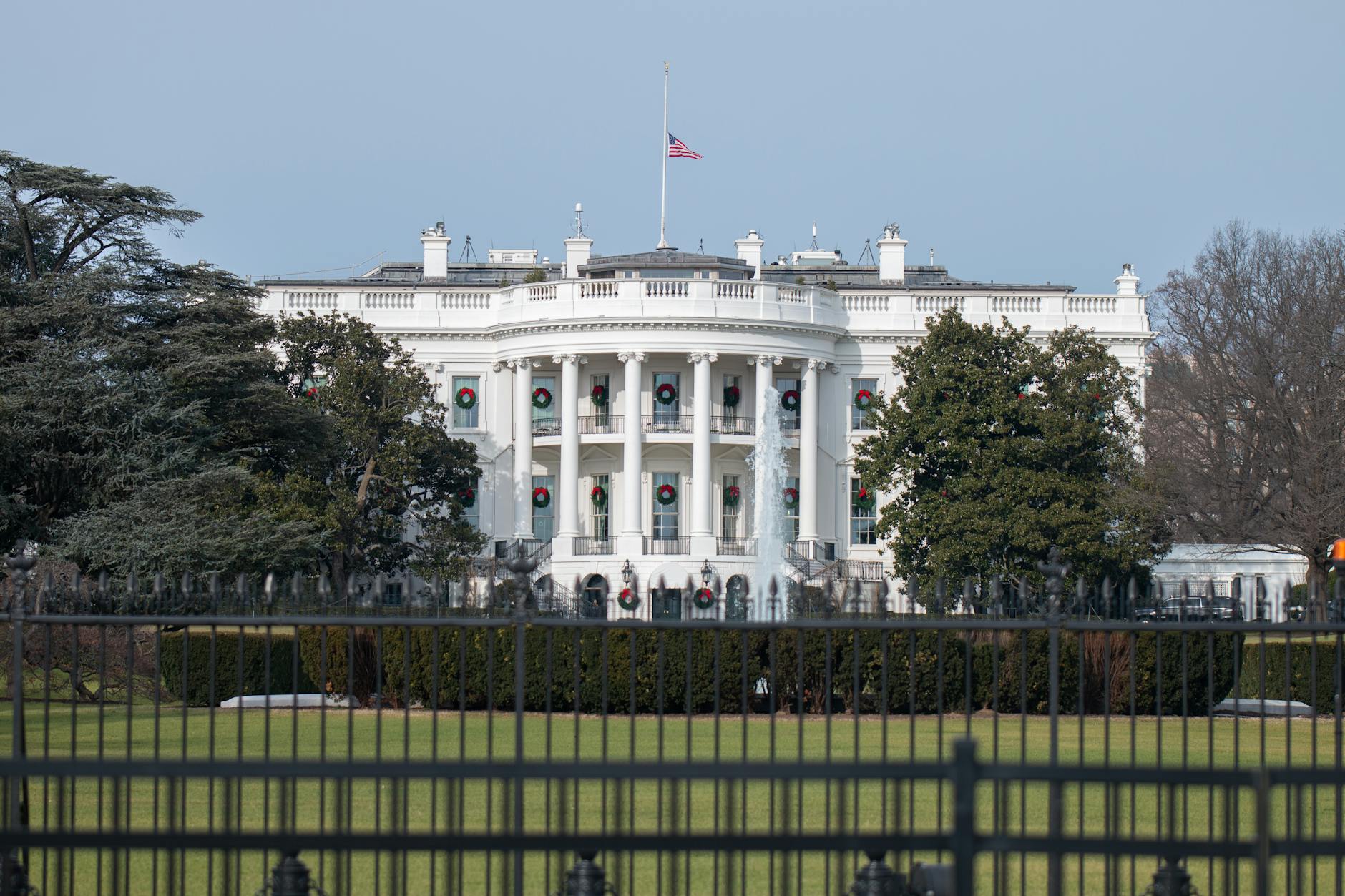
In an ambitious effort to modernize alliance management and regress U.S. diplomacy to a particularly vindictive elementary school classroom, the White House has reportedly devised a “naughty and nice” list to rank NATO allies by how generously they shovel military support toward Washington’s preferred causes.
Officials insist this is not a loyalty test, but rather a “comprehensive performance review with festive branding,” as if adding tinsel to a spreadsheet of geopolitical pressure points somehow makes it policy instead of a mood.
Santa’s National Security Council
According to multiple officials familiar with the matter—meaning people who have received at least one passive-aggressive email from the National Security Council—the White House has started categorizing allies into tiers based on their military contributions, especially on Ukraine, and their general willingness to do things that look good in American newspapers.
Countries that send weapons quickly, vote correctly at the U.N., and refrain from asking annoying questions like “what’s the endgame?” reportedly land in the “Nice” column. Those who hesitate, ask about budgets, or suggest diplomacy join the “Naughty” list, next to student loan debtors and anyone who tweets about Gaza.
“This is a tool to incentivize burden-sharing in a transparent, data-driven way,” said one senior administration official, requesting anonymity because the spreadsheet column labeled “Drama Queen Potential” has not yet been declassified. “Our allies expect clarity. Now they know exactly how much Christmas spirit is required to be taken seriously on security issues.”
Pressed on whether this system might infantilize sovereign states, the official shrugged. “Our NATO partners are mature democracies,” they said. “If they wanted to be treated like adults, they wouldn’t have joined an alliance where the nuclear umbrella comes with quarterly performance metrics.”
The Algorithm Will See You Now
The list, aides say, is driven by a proprietary Pentagon-National Security Council methodology that one official described as “Google Analytics for war enthusiasm.” Inputs reportedly include volume of arms deliveries, speed of parliamentary approvals, percentage of leaders who can pronounce “Article 5” without visibly checking notes, and whether their prime minister has ever said something weird about Trump on a hot mic.
In a classified briefing to select members of Congress—meaning everyone with a camera-ready furrowed brow—White House staffers reportedly displayed a color-coded map of Europe.
“Green countries are Nice,” an official explained. “Yellow are ‘Work In Progress.’ Red are Naughty. Grey means we’re still deciding how mad to be.”
One lawmaker present described the experience as “like Risk, but with more consultants.”
“Look, when I was on the campaign trail, people constantly told me, ‘Rank our allies by vibes, sir,’” President Biden did not say in any official transcript. “We just finally got around to it.”
In an “official explanation” circulated to embassies and instantly forwarded to every foreign journalist on earth, the White House clarified the purpose of the list:
“This tool is designed solely to enhance alliance cohesion, not to punish or reward any specific country. That will be handled separately through bilateral shaming, awkward photo ops, and strategic seat assignments at summits.”
Escalation: The Holiday Season Goes Global
What began as an internal tracking mechanism quickly escalated when, according to diplomatic sources, someone at the National Security Council suggested turning the list into a “yearly tradition.” Within hours, a draft memo proposed a full “Transatlantic Holiday Accountability Framework.”
Under the proposal, the White House would publish an annual “NATO Naughty & Nice Report” each December, complete with:
• Individual country blurbs (“Germany: Still thinking about it.”)
• A “Most Improved Ally” award, sponsored by a major defense contractor
• A private ceremony where the U.S. president hands out miniature golden HIMARS statues to top performers
One draft even recommended sending coal to underperforming allies, before a legal advisor noted that Europe already receives that in the form of U.S. climate policy.
“We have to be careful,” cautioned a State Department official familiar with the debate. “We don’t want to create divisions inside the alliance. On the other hand, we do love a league table.”
Diplomats from smaller NATO states, already accustomed to discovering their strategic value via Politico leaks, reacted with mingled irritation and resignation.
“We used to worry about Russian missiles,” said one Eastern European ambassador, speaking off the record. “Now I’m more afraid of ending up in the same category as Hungary on a PowerPoint slide.”
European officials have reportedly responded by commissioning their own internal rankings of the United States, tentatively titled “Stable Partner / Manageable Chaos / At Any Moment Trump.”
Supreme Court of Vibes
While the NATO spreadsheet roiled foreign ministries, the concept was received enthusiastically in Washington, where lawmakers immediately began asking how this could be turned into a domestic political weapon.
Several members of Congress reportedly inquired whether they, too, could be sorted into Naughty and Nice categories based on their votes for Ukraine aid, Israel support, or general willingness to look serious on Sunday shows.
“If the White House has a list, then Trump is going to want his own list,” observed one Republican strategist. “His will be hand-written, laminated, and legally binding.”
Legal scholars, their lives already dominated by hypothetical Trump scenarios, began speculating about what would happen if a future administration tried to condition all foreign aid on one’s “Nice” status—and whether the Supreme Court would recognize this as a new constitutional doctrine: Originalist Santa.
“Under the emerging unitary executive theory of Christmas,” said a fictional law professor at Georgetown, “the president retains plenary power to decide who gets presents, unless Congress explicitly states, ‘You cannot withhold tanks just because they didn’t laugh at your joke at the last G7.’”
The Iran, Trump, and Congress Side Quests
As the NATO sorting hat gained attention, foreign policy hands noticed an even stranger subtext: the list, sources say, is also being quietly used to gauge who might back Washington’s next moves on Iran.
“We don’t call it a war coalition anymore,” said one think tank fellow. “We call it a ‘Nice List Alignment Opportunity.’”
Across the Atlantic, European leaders are reportedly haunted by a recurring nightmare: It’s 2025, Trump is back in the White House, and the same countries now being pressured to send more artillery to Ukraine are instead being graded on how quickly they endorse whatever unilateral thing he decides to do about Tehran at 3:12 a.m.
Congress, meanwhile, is torn between its love of scoring systems and its hatred of being scored by anyone else. One committee chair has already floated the idea of subpoenaing the Naughty and Nice list so that American voters can see “which countries believe in freedom and which countries believe in balanced budgets.”
“If the founding fathers had had Excel, this is exactly how they would have ranked France,” he did not say.
The Quiet Part Out Loud
Beneath the seasonal branding, the list dramatizes something that’s been obvious for years: alliances are now managed less like mutual defense pacts and more like loyalty programs. Points are awarded for correct behavior, deducted for independent foreign policies, and occasionally tripled during special limited-time conflicts.
The difference now is that, instead of pretending this is about shared values and long-term security, the White House appears ready to admit it’s about meeting the quarterly expectations of Congress, defense contractors, and newspaper op-ed pages that still think it’s 1997.
In the end, one European diplomat put it best:
“We understand the message,” they said. “If we want to be on the Nice list, we must send more weapons. If we end up on the Naughty list, we get stern phone calls. Either way, the only one really getting presents is Raytheon.”
Asked whether there were any plans to add a third category—countries advocating for diplomacy—the official paused.
“Oh,” they said. “We just call those ‘undecided.’”
Reality Check
According to reports, the Biden White House has created an internal “naughty and nice” style ranking of NATO allies based on the level and speed of their military support, especially regarding Ukraine. The system is intended to pressure and incentivize countries to increase their contributions and align more closely with U.S. priorities. While the details are not fully public, the story reflects growing U.S. frustration with some allies seen as slow or hesitant on security commitments. The article above exaggerates and fictionalizes these dynamics for satirical effect.
Satire disclaimer: This article is satire and parody. It is not factual reporting.
Original source: thecradle.co
Image credit: Sachith Ravishka Kodikara — source. Show a visible credit link to Pexels on the site.
[…] 22, 2026 Political Chaos Staff 0 Comments 0 […]