

A completely reasonable response to an unreasonable political news cycle.
White House staff were forced to quietly check the calendar, the lunar cycle, and several golf tournament schedules Friday after President Donald Trump announced that the United States and Iran could reach a deal “within the next day or two,” in what officials are now calling “a new phase of precision ambiguity in American diplomacy.”
The proposed agreement, whose contents appear to include everything from a ceasefire framework to vague plans for oil markets and possibly season tickets to geopolitical relevance, was unveiled in classic Trump fashion: as an offhand remark, attached to no visible documents, and immediately followed by a contradiction of something he’d said earlier that same morning.
The 48-Hour Geopolitical Challenge
According to senior administration officials, the “day or two” timeline is less a literal deadline and more of a “creative narrative device” meant to “build suspense” in global energy markets and cable news ratings.
“The President operates on Trump Standard Time,” one White House official explained, speaking on condition of anonymity and frequent antacids. “When he says ‘a day or two,’ that could mean 48 hours, 48 days, or the second term of a future president. The important thing is that it sounds very soon and makes oil prices do something interesting.”
Trump himself appeared eager to emphasize the urgency of the moment.
“We’re very close, maybe the closest anyone has ever been, people are saying this,” Trump told reporters. “It could happen in a day, it could happen in two days, it could happen faster than that if you don’t count weekends, holidays, or times when Iran is being very disrespectful.”
Iranian officials responded with their own nuanced assessment of the timeline, saying they were “reviewing the proposal carefully” and would provide an answer “in due course,” which seasoned diplomats confirmed translates roughly to “as soon as we figure out what on earth he’s talking about.”
Terms, Conditions, and Other Missing Documents
While no details of the potential agreement have been released, officials insist the deal will “absolutely, definitely” address several complex issues, including oil exports, sanctions relief, prisoner matters, and how many times per week the phrase “maximum pressure” is legally permitted in a press conference.
One draft section, according to a source who insists it was real until someone printed it, may even cover a temporary regional ceasefire framework.
“The President believes in the power of a good ceasefire announcement,” a senior adviser said. “He has a proven record of declaring peace in situations that have not technically changed.”
Pressed for details, the adviser added, “Look, we have a flexible approach. If we can’t get a ceasefire, we can pivot to a ‘strong intention to someday think about calm.’ That still plays well with the markets.”
European allies, told that a major US–Iranian development might be imminent, are reportedly refreshing their inboxes every 15 minutes, trying to determine whether this will be a substantive diplomatic shift or another episode of “The President Said a Thing Again.” Analysts warn it could be both.
The Oil, The Tweet, and The ‘Official Explanation’
The announcement had an immediate impact on global oil prices, which briefly spiked, then fell, then spun around twice and lay down to recover. Traders confessed they no longer knew whether they were supposed to bet on war, peace, or the possibility that everything is actually a promo for an infrastructure week rebrand.
In response to the confusion, the White House released an official explanation meant to “reassure markets.”
“The President’s comment about a deal in ‘a day or two’ should be understood within the long and proud tradition of American strategic rhetoric, which includes the phrases ‘mission accomplished,’ ‘short, decisive conflict,’ and ‘we’ll be out by Christmas.’ Investors are encouraged to interpret this as bullish, bearish, or both, depending on their preexisting positions.”
Markets reportedly found the statement “deeply clarifying,” in the sense that it confirmed no one has any idea what is going on, which is at least a stable baseline.
Trump later amplified his own remarks on social media, declaring: “BIG IRAN DEAL COMING VERY SOON. Everyone wants it. Oil, peace, strong borders, everything. Only I could do this!!!” He did not specify what “this” was, but a helpful White House aide was later seen Googling “can you announce a deal before you have one.”
Diplomacy by Countdown Clock
Inside the West Wing, staffers have reportedly installed a large digital countdown clock labeled “Trump’s ‘Day or Two’ Till Deal” that periodically resets itself whenever the President gets distracted by another issue, such as a cable segment about crowd sizes or a map that doesn’t look sufficiently flattering.
One national security staffer, speaking quietly in a hallway in what they thought was off the record, summarized the situation:
“Our Iran policy is now basically a cross between a real crisis, a reality show, and a 72-hour sale at a mattress store. Every time the clock hits zero, instead of a deal, we just get another briefing.”
When asked whether the administration is coordinated with Iran on this accelerated timeline, another official offered a more philosophical view.
“In diplomacy, time is relative,” the official said. “For Iran, ‘soon’ might mean within the year. For the State Department, it’s within the decade. For the President, it’s whenever the nearest camera turns on. We meet in the middle by pretending these are compatible realities.”
The Escalation: All-In on the Next 48 Hours
As the self-imposed “day or two” mark approached, the White House reportedly escalated its strategy, declaring a “National Week of Imminent Outcomes” in which at least four major issues would be declared “close to being solved” every 24 hours.
By Saturday afternoon, anonymous officials were promising a “historic Iran understanding,” a “transformational Middle East ceasefire concept,” a “major new oil stability framework,” and “an announcement about something big with China, details to follow, maybe.”
State Department employees, many of whom had not been informed that they were on the verge of multiple breakthroughs, began triaging their inboxes with the same technique used for natural disasters: color-coding emails by how unrealistic they sounded.
“We hit a point where the President had promised more historic agreements than we have actual diplomats,” one frustrated career official said. “We’re short-staffed, but time, fortunately, is infinite in this White House. The future is always ‘a day or two’ away.”
Meanwhile in Tehran, officials reportedly convened a special committee tasked with interpreting Trump’s statements, consisting of diplomats, energy experts, and a panel of linguists who recently completed a fellowship program in “Advanced Trump-to-Policy Translation.” Their preliminary conclusion: nothing would be signed until they saw words on paper that did not conflict with a tweet sent 15 minutes later.
Reality Check
The real news behind this satire: President Donald Trump said on Friday that the United States and Iran might conclude a deal “within the next day or two.” He did not provide public details about the potential agreement, but reporting suggests it could relate to de-escalation, sanctions, or regional issues. The statement introduced uncertainty into diplomatic and oil market discussions, as observers waited to see whether concrete terms would follow the accelerated timeline. As of now, the outcome and specifics of any such deal remain unclear.
Satire disclaimer: This article is satire and parody. It is not factual reporting.
Original source: Sputnikglobe.com
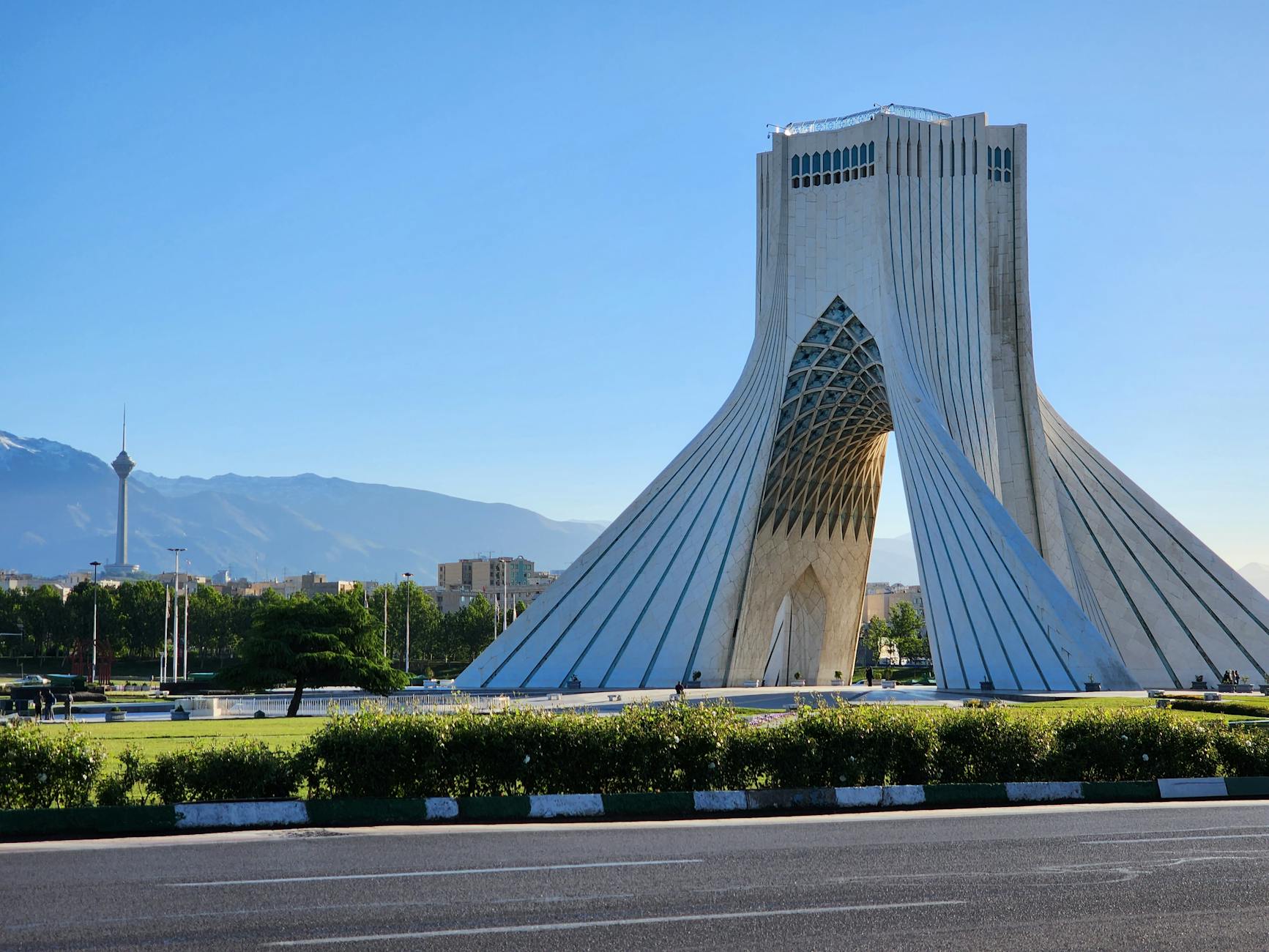
Image credit: Aref Sarkhosh — source. Show a visible credit link to Pexels on the site.