

A completely reasonable response to an unreasonable political news cycle.
Energy markets cheered, the White House congratulated itself, and CNN’s Richard Quest carefully stared at an empty patch of water on live television, patiently waiting for a ship promised by the President of the United States to appear like a very expensive, oil-based Hogwarts letter.
In a segment that was supposed to show confident tankers surging through the Strait of Hormuz following Donald Trump’s assurances, Quest instead delivered the kind of quiet existential crisis usually reserved for philosophy majors and airline passengers on hour four of a tarmac delay.
“We haven’t actually seen the ships, by the way, going through,” Quest reported, sounding like a man who had expected at least one physical manifestation of global trade. “And so yes, the market has given an extremely positive reaction because this is what they want.”
The market, it seems, has decided that evidence is optional, as long as the vibes are bullish.
Welcome to the Faith-Based Shipping Community
According to administration allies, the real story is not whether ships are actually traversing the Strait, but whether we, as a free people, choose to believe that they are.
“This is what we call faith-based logistics,” explained one senior energy adviser, speaking on background while standing in front of a map that, upon closer inspection, was just a Cheesecake Factory menu turned sideways. “If the president says ships are moving, then for the purposes of market efficiency, they are. It would be irresponsible to let physical reality interfere with investor confidence.”
Pressed to clarify whether tankers were visible on satellite imagery, radar, or the old-fashioned ‘looking out the window’ method, the adviser was unbothered.
“We have all sorts of data,” he said. “Sentiment data, expectation data, index futures, extremely positive squiggly lines. Our job is to keep the line going up. If that requires temporarily decoupling from the tyranny of literal ships, then that’s a sacrifice we are prepared for anonymous maritime workers to make.”
The White House, eager to project calm, emphasized that the president had been “fully briefed” by television graphics and a particularly confident chyron.
“Look, the president has seen multiple very impressive animations of ships going through very narrow gray channels near brown land masses,” said the acting Deputy Assistant Press Liaison for Strategic Appearances. “These were 3D. They had shadows. Frankly, they looked more real than the real thing.”
“We are a community of belief,” she added, “and right now, the community strongly believes in ships.”
The Invisible Armada
In an effort to reconcile presidential assurances with the glaring absence of actual vessels, administration officials debuted what they called a “new, cutting-edge maritime posture.”
“You’ve heard of stealth fighters,” a Pentagon spokesperson said. “These are stealth tankers.”
Asked why the Department of Defense had not previously mentioned the existence of massive stealth oil tankers, the spokesperson offered an official explanation that was later emailed to reporters in a PowerPoint file titled FINAL_FINAL2_REALLYFINAL_THISONE.pptx.
“Our tankers are so stealthy that not even we can see them. This is by design. Any suggestion that we simply misread a chart, a tweet, or a cable news lower-third is disinformation, possibly from windmills.”
Marine traffic trackers, satellite firms, and people who live near water remained unconvinced. “We have absolutely no evidence of any increased tanker traffic,” said one shipping analyst. “Though if the government has discovered a way to move 160,000 tons of crude oil without displacing so much as a seagull, that does open exciting new frontiers for hauntings.”
Still, markets remained buoyant.
“We’ve priced in the existence of the ships,” one hedge fund manager explained. “If they turn out not to exist, we will simply reclassify them as a confidence derivative. As long as the narrative is moving through the Strait of Hormuz, our positions are safe.”
Live from Nowhere in Particular
Stranded between presidential optimism and the stubborn physical emptiness of the ocean, cable news did what it does best: televised the confusion.
Richard Quest, deployed to narrate the triumphant passage of global commerce, was instead reduced to describing the textures of nothingness.
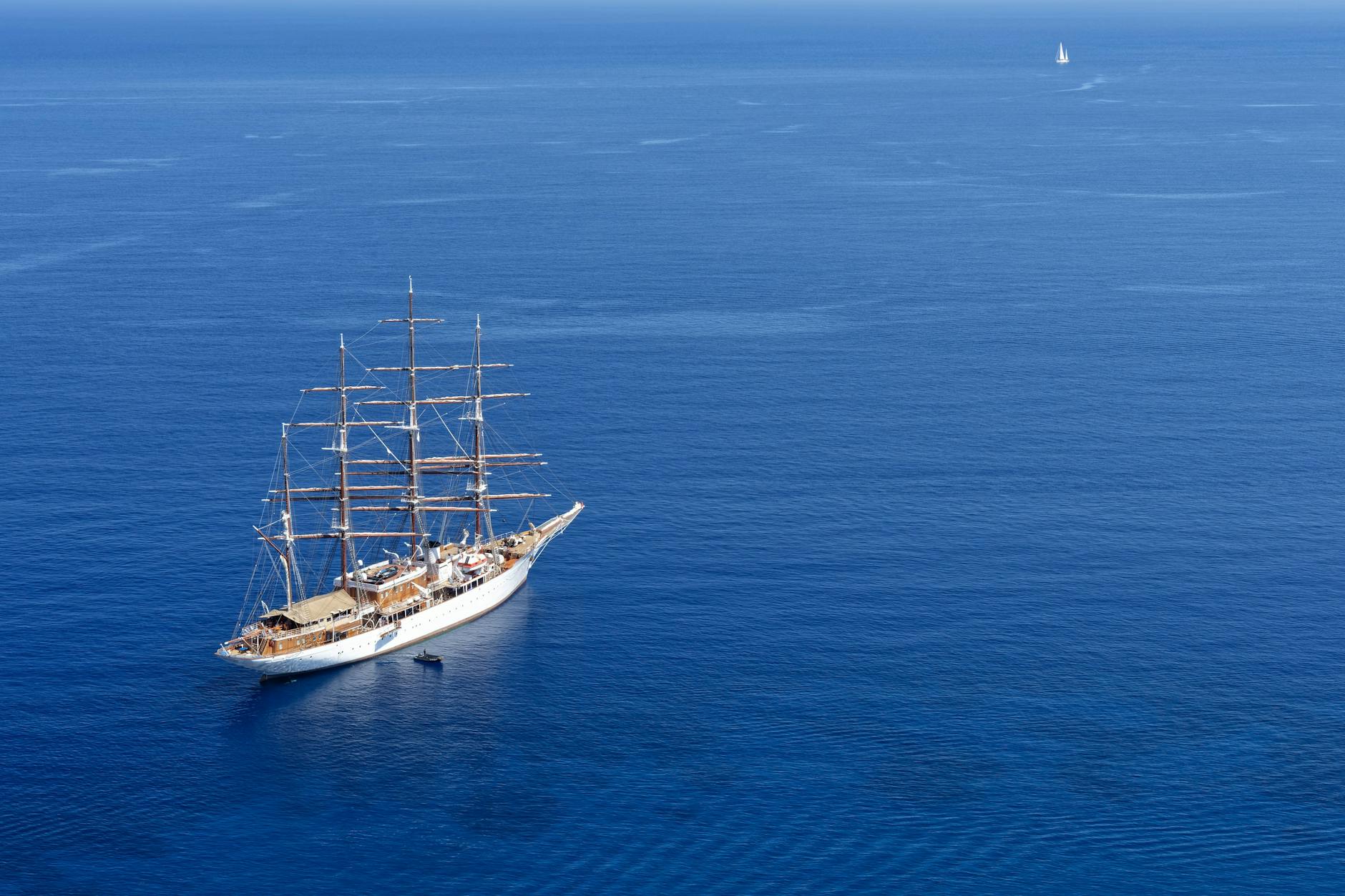
“What you’re seeing behind me,” he said, gesturing at a calm, shipless horizon, “is the exact spot where, according to the president, ships are absolutely, definitely, without question sailing through. It is—how shall we put it?—a robust marketplace for hypothetical tankers.”
At one point, a small fishing boat glided into frame, sparking a brief surge of optimism among producers.
“Is that one of them?” Quest asked off-camera, visibly desperate to identify something that carried more than three buckets and a cooler.
After a tense pause, network graphics hastily lowered the “BREAKING NEWS” banner to “DEVELOPING SITUATION,” then further down to “CIRCUMSTANTIAL WATER.”
The escalation came when a White House-aligned pundit insisted on-air that the absence of ships was itself proof of success.
“You don’t understand,” the pundit said. “If you can’t see the ships, that means the Iranians can’t see the ships. That’s deterrence. That’s genius. You people in the reality-based observation community are always ten moves behind.”
The segment ended with a split screen: on the left, a perfectly calm body of water; on the right, a commentator heatedly insisting that you were watching a major international shipping lane “absolutely swarming with activity if you have the right mindset.”
The Market Will See You Now
For all the absurdity, the episode was a fairly straightforward case study in the modern information economy: a president makes a confidence-boosting claim; markets respond to the words, not the world; television tries to film the world anyway and is left broadcasting the awkward silence between them.
“What choice do we have?” an oil trader asked rhetorically. “If we insist on basing decisions on verifiable tanker movements, we’ll fall behind competitors who are trading on pure presidential adjectives. This isn’t about energy; it’s about belief velocity.”
By the end of the day, analysts agreed on a new rule: as long as a statement is assertive enough, futures contracts will treat it as provisionally true for the duration of at least one news cycle.
Reality, as usual, is expected to catch up at some later, less ratings-friendly date.
Quest, for his part, summed up the situation with the weary precision of someone who has done this many times.
“The president says the ships are there, the markets act as if the ships are there, and my job is to stand in front of where the ships would be if they were there,” he said. “In television, as in geopolitics, sometimes the most important thing is not what you can see, but what you’ve already booked studio time for.”
And in the end, maybe the tankers did pass through the Strait of Hormuz, unnoticed, unseen, and unfilmed—eclipsed entirely by the far larger traffic jam of narratives trying to get through first.
Reality Check
The satire above is based on real coverage of Donald Trump’s remarks about shipping in the Strait of Hormuz and the oil market’s reaction. CNN’s Richard Quest noted on air that, despite positive market movement after Trump’s assurances, they had not actually seen tankers sailing through as described. The incident highlighted how financial markets often respond to political statements and expectations rather than confirmed, observable facts on the ground.
Satire disclaimer: This article is satire and parody. It is not factual reporting.
Original source: Mediaite
Image credit: Gu Bra — source. Show a visible credit link to Pexels on the site.