

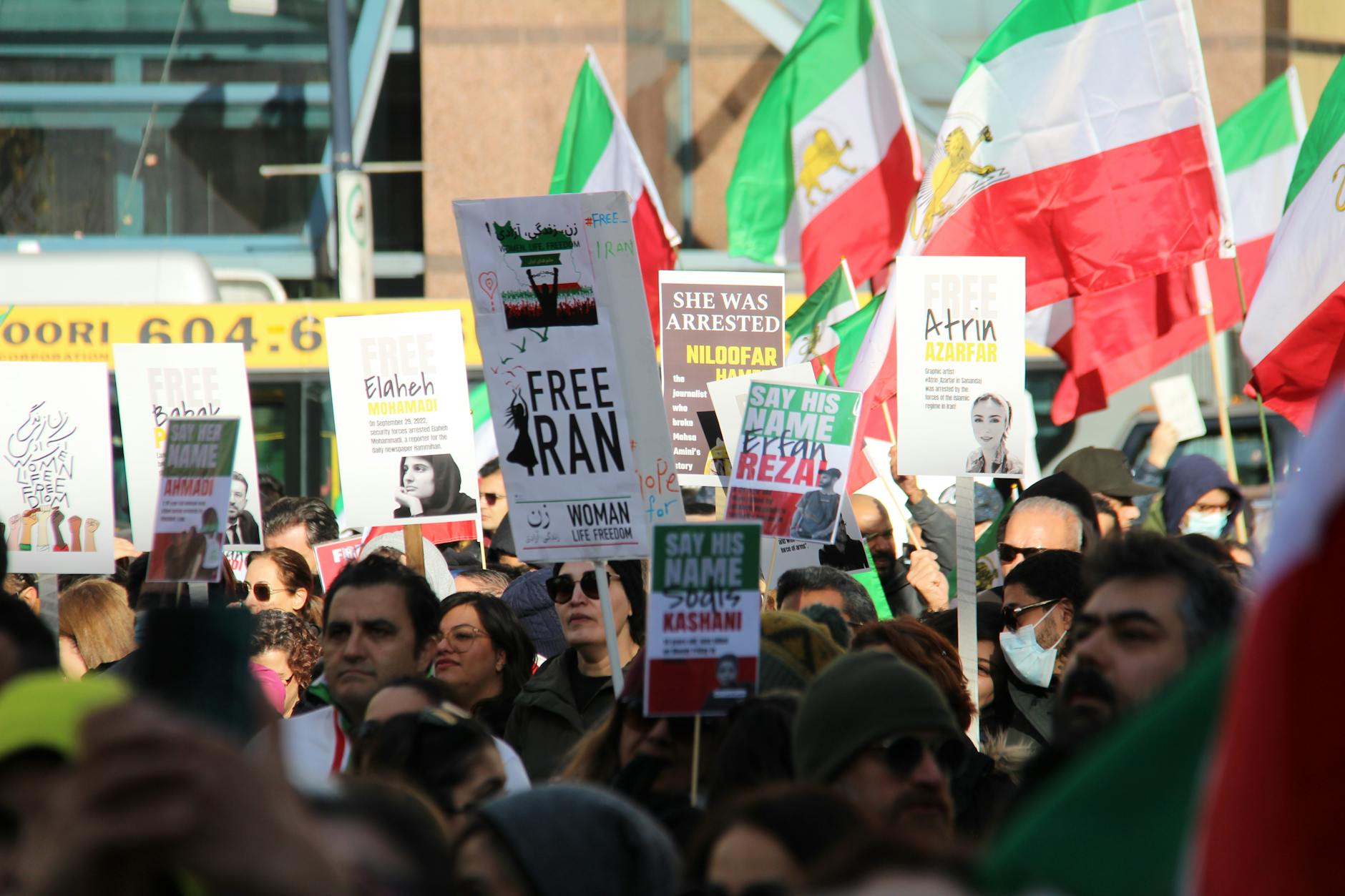
A completely reasonable response to an unreasonable political news cycle.
Lawmakers on Capitol Hill reacted with bipartisan alarm this week after Iran’s parliamentary speaker accused former President Donald Trump of making “seven claims in one hour, all false,” prompting members of Congress to worry that hostile foreign powers were undercutting America’s historic leadership in the field of industrial-scale political misinformation.
“If Iran is going to start fact-checking our former presidents in real time, what’s left for us to do?” asked one exasperated House staffer, scrolling furiously through cable clips like a day trader in a collapsing market. “Next they’ll be grading our floor speeches for accuracy. That’s our voters’ job, theoretically.”
Congress Confronts a National Pride Issue
The controversy began after the reopening of the Strait of Hormuz, when Trump delivered a televised commentary that reportedly included seven separate inaccurate claims in sixty minutes, a pace U.S. political strategists privately described as “solid but not career-best.” Iran’s parliament speaker quickly condemned the statements, prompting immediate outrage in Washington, where many saw the move as a direct challenge to America’s traditional monopoly on performative indignation.
“We will not sit idly by while a foreign legislative body criticizes inaccurate statements by a former U.S. head of state,” declared Sen. Marjorie Kellis (R-somewhere safely gerrymandered). “That is clearly the jurisdiction of our own House Oversight Committee, cable news panels, and my personal podcast.”
Within hours, a bipartisan coalition introduced the “American Exceptionalism in Exaggeration Act,” which would formally recognize the United States as the “world’s preeminent producer, exporter, and domestic consumer of political nonsense.” The bill proposes sanctions on any foreign government that attempts to quantify, rank, or contextually explain statements made by U.S. officials past or present, unless those efforts are outsourced to a U.S. tech company with an ad-supported fact-check portal.
“Foreign attempts to measure the veracity of American politicians threaten our information sovereignty,” insisted Rep. Daniel Hoyer (D-worried about his primary). “If we allow this, next they’ll start asking us to read the bills we pass.”
China, observing the spectacle with quiet interest, reportedly considered filing its own complaint about Trump’s comments, but ultimately decided there was “no strategic upside in arguing with someone whose domestic opposition already does that on live television every night for ratings.”
The Official Explanation: A “Time-Zone Misinformation Anomaly”
Faced with mounting questions, a joint congressional briefing offered what staffers called an “official explanation” for the controversy, presented in the resolutely calm tone usually reserved for explaining why a government website does not work.
According to a 36-page memo from the newly formed Subcommittee on Narrative Stability, Trump’s statements were not “lies” but rather “time-zone misinformation anomalies.” Because the comments were made about past and ongoing events across multiple regions—China, Iran, and “the best deals you’ve ever seen, people”—their factual content allegedly “varied significantly depending on the viewer’s longitude, cable provider, and preexisting partisan alignment.”
“In the Eastern time zone, at least two of the statements were technically plausible for approximately 11 seconds,” the memo claimed, citing a classified spreadsheet. “By Pacific time, however, all seven no longer had a reference point in observable reality. We consider that a scheduling problem, not an integrity issue.”
Lawmakers further argued that comparing Trump’s claims to objective reality was “inherently unfair,” since most American political rhetoric is graded on a curve that ranges from “aspirational” to “spiritually adjacent to the truth.” Iran, they said, had applied a rigid, literal standard that, if used domestically, would instantly render half of Congress’s press releases in violation of the Geneva Conventions on Boredom and Deception.
“In our system, a statement is considered accurate if it survives three cable segments and one fundraising email without catastrophic backlash,” explained a senior Senate communications director. “International norms don’t account for that.”
Escalation: The Great Misinformation Olympics
The situation escalated when Iran’s speaker suggested that if the U.S. continued issuing “false and provocative” claims, Tehran might publish a detailed breakdown of each in partnership with unnamed “global media outlets,” reportedly including The Times, MSN, and “that one news.com site your uncle keeps emailing you.”
Congress took this as a declaration of narrative war.
In response, the House Foreign Affairs Committee announced hearings on what Chairwoman Abby Tolland described as “Iran’s aggressive move into America’s core competence: saying things confidently that do not correspond to the material universe.” Witnesses scheduled to appear include former press secretaries, professional campaign surrogates, and at least one pollster who still insists 2016 was within the margin of error.
To demonstrate America’s continued dominance, a group of senators proposed turning the dispute into a global “Misinformation Olympics,” hosted alternately by Fox News and MSNBC, with CNN providing fact-check graphics that no one reads.
The proposed events include:
• The 100-Meter Walkback: Contestants must reverse a previously confident statement in under 24 hours without admitting error.
• Synchronized Outrage: Two rival lawmakers denounce each other for doing the exact thing they both voted for.
• Long-Form Filibuster: Competitors read unrelated material on China, Iran, and “the American people” for as long as possible without making a verifiable claim.
Trump’s team reportedly indicated he would “absolutely, strongly, tremendously” participate, provided his performance is judged by “the American people, the real people, not the fake ones,” and at least one Chinese social media app is banned during the event “for ratings.”
When Everyone’s a Fact-Checker, No One Is
Beneath the comedy of a foreign parliament painstakingly documenting the inaccuracy of a former U.S. president’s ad-libbed remarks lies an awkward truth that Congress would rather not discuss on camera: America’s political system now treats fact-checking as a combat sport, not a civic duty.
Republicans selectively cite foreign criticism when it embarrasses Democrats on Iran policy; Democrats wave international headlines when it wounds Trump. No one, least of all Congress, shows much interest in a stable shared reality that might reduce fundraising urgency or limit the need for dramatic floor speeches about “what China is doing” and “what Iran is getting away with” while nothing actually moves through committee.
So when Iran’s speaker says “seven claims in one hour, all false,” the response in Washington is not self-reflection, but a procedural question: is that number seasonally adjusted, and can we use it in an email subject line that reads “THEY’RE LYING TO YOU (AGAIN)” before the other party does?
In the end, the only bipartisan conclusion to emerge from the uproar was quietly circulated in an unmarked memo: if foreign parliaments start keeping score on U.S. political truthfulness, the American Congress might eventually be forced to improve its own averages—an outcome both parties agree would be “deeply destabilizing to existing campaign strategies.”
For now, lawmakers have decided on the safest possible course of action: issuing strongly worded statements about China, scheduling hearings on Iran, and hoping voters never notice that everyone involved is mostly arguing over who gets to be the least accurate in peace.
Reality Check
The real story behind this satire: After the temporary closure and subsequent reopening of the Strait of Hormuz, former President Donald Trump made several public claims about Iran and the situation. Iran’s parliamentary speaker criticized Trump, accusing him of making “seven claims in one hour, all false,” and condemned his remarks as misleading and provocative.
The incident reflects ongoing tensions between the U.S. and Iran, where rhetoric from both sides often becomes part of a broader geopolitical information battle. The satire exaggerates Congress’s reaction to highlight how political actors frequently weaponize “truth” and “fact-checking” for partisan advantage rather than genuine clarity.
Satire disclaimer: This article is satire and parody. It is not factual reporting.
Original source: MSN
Image credit: Sima Ghaffarzadeh — source. Show a visible credit link to Pexels on the site.