

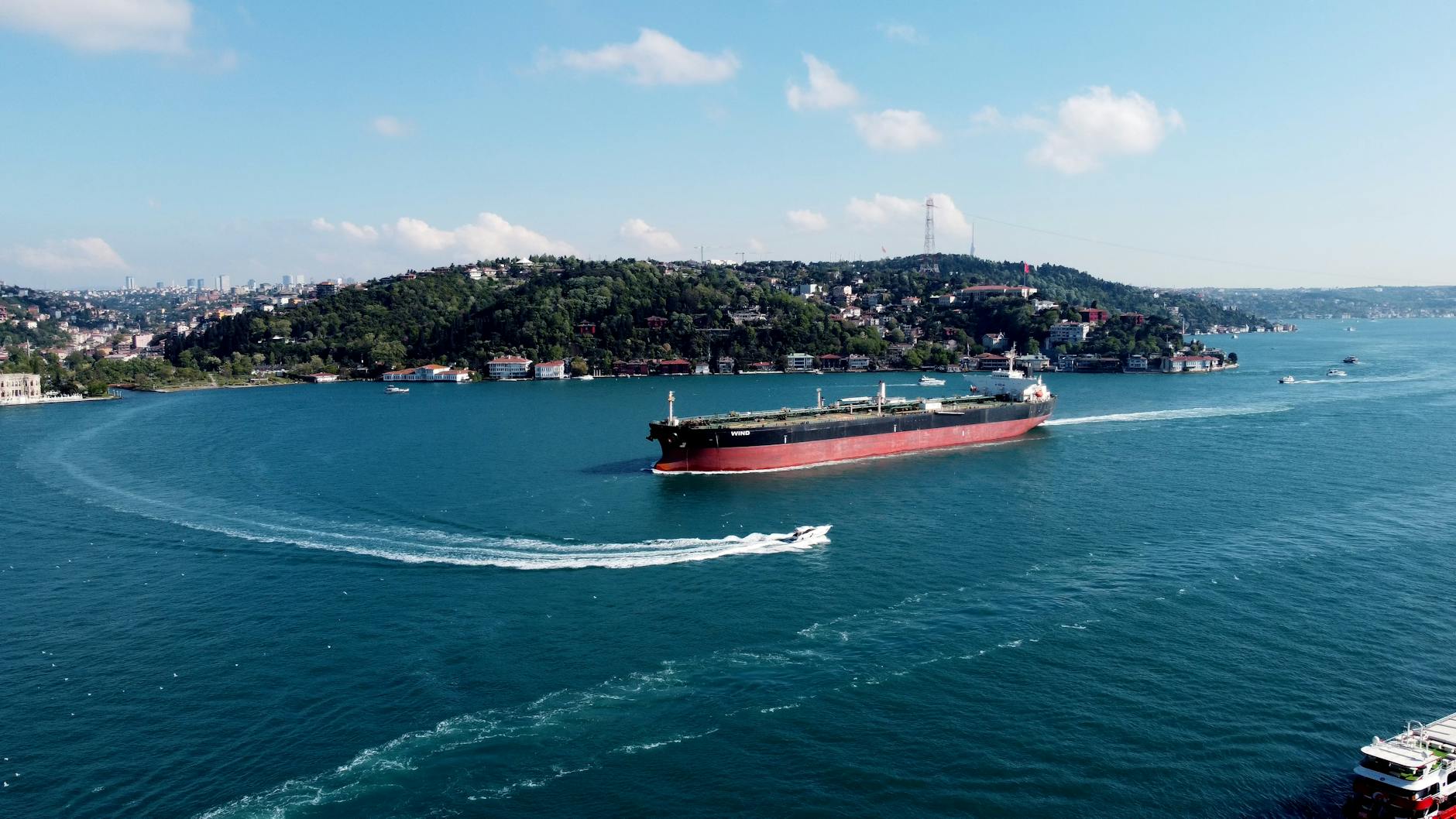
Officials said the shipping crisis was “substantially resolved” once everyone agreed not to ask the same question twice.
The Trump administration on Wednesday unveiled what it called a “comprehensive reopening framework” for the Strait of Hormuz, after spending most of the morning clarifying whether the framework existed, whether Iran had received it, and why a laminated copy appeared in a court filing labeled “Supreme/Senate/Boats/com.”
At a hastily arranged White House briefing, officials insisted the confusion was not confusion but “multi-agency maritime optionality,” a phrase aides repeated until it began to sound legally binding.
“The president has directed the full power of the federal government toward reopening this critical waterway, pending final determination of which department is currently in charge of water,” said Deputy Assistant Coordinator for Strategic Passageways Trent Bickel. “That process is moving at tremendous speed through the appropriate confusion channels.”
A Plan With Several Names And No Known Custodian
According to three administration officials and one visibly tired map, the plan to reopen the strait has been referred to internally as Operation Open Faucet, Operation Boat Door, and the Hormuz Customer Experience Reset. A senior aide said the competing titles demonstrate “message discipline across multiple realities.”
The first version of the plan reportedly instructed the Navy to “encourage commerce with confidence,” while a second version directed the Commerce Department to “project naval seriousness.” A third version, accidentally sent to Senate staffers as a fundraising email, asked recipients to “chip in $47 to defeat maritime weakness.”
“People are acting like it’s a problem that the court has one version, the Senate has another, and Iran may have received a PDF with track changes,” said one White House official. “But that is exactly how deterrence works: nobody can retaliate against a policy they cannot identify.”
The administration’s official explanation grew more elaborate after reporters asked whether the Strait of Hormuz was open, closed, partially open, symbolically open, or open only in campaign graphics. Officials responded by forming the Interagency Commission on Narrow Water Optimism, which immediately scheduled a listening session with tankers.
Supreme Confusion Reaches Congressional Altitude
On Capitol Hill, senators from both parties demanded clarity, prompting the White House to send over a one-page memo consisting of a seal, a signature line, and the sentence, “The president’s position remains supreme.” Legal analysts noted that while the phrase sounded important, it did not appear to correspond to any known doctrine, statute, or sentence structure.
Still, administration allies praised the effort. One Republican senator called it “the most decisive possible response under circumstances where decisiveness would create discoverable records.” A Democratic aide described the briefing as “a hostage video filmed by a PowerPoint.”
By late afternoon, the White House announced that the strait had been “administratively reopened,” meaning vessels were free to transit provided they first understood the policy better than the officials implementing it.
“This is not chaos,” Bickel said. “Chaos lacks a rollout calendar.”
Reality Check
The real news is that reports say the Trump administration has created confusion while trying to address the reopening of the Strait of Hormuz. The Strait is a crucial shipping route near Iran, especially for global energy markets. This article is satire and exaggerates the bureaucratic and political uncertainty surrounding the situation.
Satire disclaimer: This article is satire and parody. It is not factual reporting.
Original source: WSLS
Image credit: Julien Goettelmann — source. Show a visible credit link to Pexels on the site.
[…] White House Announces Hormuz Fix After Misplacing Iran Memo In Court […]