

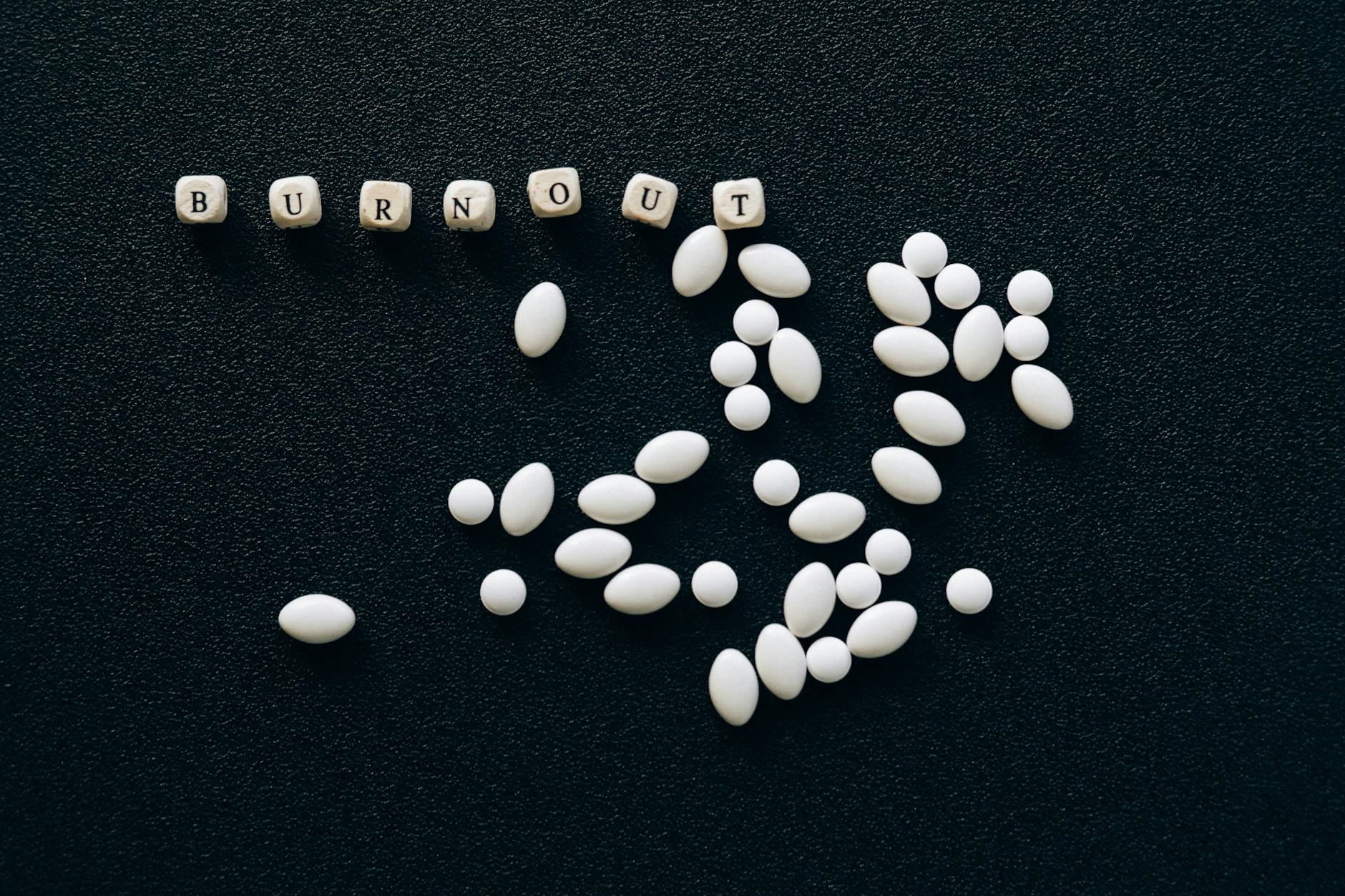
A completely reasonable response to an unreasonable political news cycle.
In a move that critics are calling “bold,” “innovative,” and “probably inspired by someone staring too long at the Resolute Desk wood grain,” the White House has ordered federal regulators to speed up reviews of psychedelic treatments for mental health—apparently deciding that of all the institutions in Washington, the one that should start hallucinating first is the Food and Drug Administration.
Officials say the directive is aimed at accelerating access to promising treatments for depression, PTSD, and anxiety, and definitely not at preparing the entire country for the next election news cycle, which several medical journals have quietly classified as “a recurring national psychotic episode.”
Administration Sees Bright Future, Also Several Melting Filing Cabinets
According to senior aides, the White House wants the FDA to treat psychedelic therapies—such as MDMA- and psilocybin-assisted treatments for PTSD and severe depression—as “priority review” items. The move effectively tells the famously cautious agency to put down its 800-page guidance documents, stop rereading the same footnote for three months, and go look at the pretty colors of emerging data.
“We’re talking about evidence-based therapies with serious clinical potential,” said one health policy adviser, adjusting a tie patterned suspiciously like a Rothko painting. “We are absolutely not saying, ‘Let’s dose the electorate and hope for the best.’ That would be irresponsible. We are saying, ‘Let’s dose them in a controlled, double-blind, IRB-approved way and bill insurance.’”
Republicans immediately accused the administration of “weaponizing psychedelics” after discovering there was no obvious way to blame China, Iran, or Hunter Biden’s laptop for the development, but promised to keep looking. Democrats, sensing an opportunity, began workshopping phrases like “neuroplasticity equity” and “pharmacological climate of care” without fully understanding any of them.
“If this helps veterans with PTSD, I’m all for it,” said one senator. “If it helps my colleagues finally admit they have no idea what’s in half the bills they vote on, I’m double for it.”
Wall Street, meanwhile, responded in its usual calm and thoughtful manner by immediately forming nine new psychedelic SPACs, four lobbying coalitions, and a start-up called MindMush™ promising “AI-informed mushroom journeys for the modern workplace.”
“Official Explanation” Reads Like a Vision Board
In a briefing document clearly written after someone “really connected with their inner policymaker,” the administration’s official explanation frames the move as a sober, measured response to a growing mental health crisis.
The document lays out three goals:
First, “relieve suffering” by accelerating access to treatments that actually work. Second, “modernize regulation” so that mid-century drug laws catch up to 21st-century science, rather than continuing to treat mushrooms like nuclear waste. Third, “reduce long-term costs,” on the untested theory that helping people heal is cheaper than letting them scream into the nation’s group chat for another decade.
On page seven, in a section someone appears to have forgotten to edit, an internal bullet point reads: “Bonus: if whole country processing trauma in facilitated psychedelic sessions, maybe fewer screaming town halls about gas stoves.” The line has since been redacted, enlarged, printed on poster board, and used as a fundraising prop by at least three House candidates.
“Let me be crystal clear,” a White House spokesperson said at the podium. “This is not about making America high. This is about making America appropriately, therapeutically, clinically high under the direct supervision of licensed professionals who accept major insurance plans.”
Behind the scenes, FDA officials—trained to move at a dignified glacial pace—are reportedly adjusting to the new speed expectations by adding an extra pot of coffee and quietly Googling, “what is MDMA” on government-issued laptops last updated during the Bush administration.
Things Escalate When Congress Notices There Might Be Feelings Involved
The situation became more surreal when members of Congress realized that psychedelic therapy generally involves patients confronting their emotions, acknowledging the existence of childhood wounds, and occasionally admitting they were wrong—values broadly considered unconstitutional on Capitol Hill.
“So just to be clear,” asked one visibly alarmed lawmaker in a closed-door briefing, “under these treatments, people might feel connected to others and question long-held narratives that divide them?” When officials confirmed this was indeed a possibility, the congressman reportedly muttered, “So it is radicalization,” and began drafting new oversight hearings.
Far-right commentators quickly warned that psychedelics could be used to “brainwash Americans into believing other humans are not their enemies,” while far-left commentators insisted the real problem was that the mushrooms were not unionized.
Fox News ran a graphic reading “MUSHROOMS: THE NEW MARXISM?” next to stock footage of a forest, while MSNBC booked a three-person panel to explore the deep ethical implications of therapy that might help both a coal miner in West Virginia and a barista in Brooklyn, deciding this was “complicated.”
In an effort to calm critics, the administration circulated an internal memo stating that any new psychedelic therapies will be introduced in a “careful, data-driven, bipartisan fashion”—defined here as “slow enough that no one has to take a real vote until after the next election.”
“We will not move faster than the science,” promised an FDA official on background. “We will, however, consider moving faster than our usual pace, which is roughly one footnote per fiscal year.”
Plans for implementation are already taking on an unmistakably Washington character. One draft proposal reportedly suggests “pilot clinics” for treatment-resistant depression to be located in communities “most impacted by despair,” meaning, in practice, several undecided swing districts.
Consultants are also exploring the concept of a “national psychedelic healing summit,” in which bipartisan leaders would publicly endorse the treatments while privately asking whether anything can be done about their own approval ratings, chronic anxiety, and strange recurring dreams about losing primaries to AI candidates.
Therapeutic Revolution, But Make It Poll-Tested
Political strategists are divided over how to message the initiative. Some favor a science-forward approach focused on clinical trial data and regulatory modernization. Others prefer something more relatable, like: “Look, everything is on fire, let’s at least stare at nice colors while we put it out.”
The White House reportedly tested several slogans:
“Psychedelic Therapy: Because Thoughts and Prayers Weren’t Working.”
“Make America Feel Again.”
“Better Living Through Chemistry, But This Time With Informed Consent.”
The leading option so far is a bland phrase about “innovative mental health solutions,” chosen because it polls well among suburban voters who don’t want to say “magic mushrooms” out loud but do quietly wonder whether something stronger than lavender tea might help.
Meanwhile, foreign policy analysts have begun asking whether a country actively researching psilocybin and MDMA might gain an edge in international negotiations.
“If Iran, China, and the U.S. delegates all took turns in a psychedelic-assisted conflict resolution session,” said one think tank fellow, “we might at least get to the stage where they agree that everyone currently at the table is, in fact, a person.” The proposal died instantly when it was pointed out that such a session might also lead participants to question the structure of the global arms trade, which several major donors found “destabilizing.”
For now, the administration is framing the rapid review order as a serious effort to address mental illness at scale. Advocates hope that by the time the FDA finishes final guidance, the idea of psychedelic therapy will seem less like a social revolution and more like a slightly unusual Tuesday at your local clinic.
That clinic, of course, will bill your insurance company, which will respond by denying coverage, approving an unrelated antidepressant from 1996, and placing you on hold to the sound of a flute loop that feels suspiciously like a bad trip.
Still, there is optimism in official circles that something real might shift—that in a nation exhausted by outrage and numbness, actually healing people could become more than a talking point.
In the end, the White House insists this is just smart, modern governance: let the scientists handle the molecules, let the FDA handle the red tape, and let America, for the first time in a long time, consider the radical act of feeling better on purpose.
Which, in Washington, may be the most psychedelic idea of all.
Reality Check
The real news: The White House has directed federal agencies, including the FDA, to speed up evaluation and potential approval of psychedelic-assisted treatments—such as MDMA and psilocybin—for conditions like PTSD and severe depression. This reflects growing clinical evidence that these substances, when used in controlled therapeutic settings, can be effective for treatment-resistant mental health disorders. The move is about prioritizing review and building a regulatory framework, not legalizing recreational psychedelic use. The satire above exaggerates the politics and cultural anxieties around this shift, but the underlying story is a real change in how federal regulators are approaching psychedelic medicine.
Satire disclaimer: This article is satire and parody. It is not factual reporting.
Original source: Pharmaceutical Commerce
Image credit: Nataliya Vaitkevich — source. Show a visible credit link to Pexels on the site.
[…] 23, 2026 Political Chaos Staff 0 Comments 0 […]
[…] 23, 2026 Political Chaos Staff 1 Comments 0 […]