

A completely reasonable response to an unreasonable political news cycle.
Early Wednesday, a third member of Congress abruptly resigned, confirming what many had suspected for months: Capitol Hill is now less a co-equal branch of government and more a revolving door with security cameras and lifetime pensions.
On paper, the departure was voluntary. In practice, it looked more like a fire drill in which everyone already knows which exit is labeled “consulting gig” and which one is “federal indictment.” Leadership hastily praised the outgoing lawmaker’s “many years of service,” a phrase that has recently come to mean “please leave before we have to learn the difference between censure and expulsion again.”
“At This Time, I Need to Spend More Time With My Legal Team”
The third resignation in as many scandal cycles prompted House and Senate leaders to roll out a new unified messaging strategy: whatever is happening is “deeply concerning,” and it will definitely be handled by “the appropriate committee,” which has been missing since 2015.
“We take these allegations extremely seriously, in the event that there are any, which we cannot comment on,” said one senior lawmaker, carefully reading from a statement he appeared to be drafting in real time for his own future use. “Out of respect for the process, we will not be discussing hypothetical wrongdoing until it is on cable news for at least 48 hours.”
Staffers, speaking on background because they were not authorized to be honest in public, said the member’s resignation followed “a pattern of revelations coming out slightly faster than the talking points.” According to one aide, “We realized we were on version nine of ‘I will not resign,’ and historically, version ten is just a press release with the word ‘effective immediately’ highlighted.”
The official explanation from the departing member’s office, however, was more upbeat: the lawmaker was leaving Congress to “pursue exciting new opportunities in the private sector, spend more time with family, and participate fully in a robust, ongoing dialogue with several federal agencies.”
Scandal Management in the Age of Infinite Outrage
With Trump court dates competing for screen time with Supreme Court intrigue, wars involving Iran and its proxies, and daily coverage of China’s every diplomatic sneeze, members of Congress have found it increasingly difficult to maintain attention for their scandals.
“It’s a crowded marketplace,” said a fictional crisis-communications consultant who now bills himself as a “Reputation Portfolio Manager.”
“If a backbench representative gets caught doing something unethical, but Trump just said something in front of a courthouse and the Supreme Court is hearing a case about democracy itself, does the ethics violation even happen?”
The answer, evidently, is yes, but only as a push alert people swipe away while searching for the latest polling cross-tabs.
To adapt, congressional leaders have reportedly formed a quiet, bipartisan “Continuity of Scandals Caucus,” dedicated to ensuring that any resignation is framed in terms of “personal growth,” “changing priorities,” and “wanting to spend more time making millions from the expertise accidentally acquired while mismanaging the public trust.”
In a closed-door session, one member allegedly proposed a proactive system: every lawmaker would file a pre-written resignation letter upon being sworn in, to be activated as soon as their name appears in the same sentence as the words “unsealed documents.” The motion was tabled, then discreetly adopted informally by almost everyone.
Escalation: The Congressional Scandal Index
As the resignations mounted, markets became nervous. To restore confidence, the House Financial Services Committee quietly commissioned a new economic indicator: the Congressional Scandal Index (CSI), intended to help investors price in the likelihood that a key vote will be unexpectedly delayed because the bill’s sponsor is busy “strongly denying wrongdoing.”
The CSI tracks a weighted basket of factors, including:
• Number of active investigations per member
• Average time between “I have no plans to resign” and resignation
• Frequency of public statements containing the phrase “these distractions”
• Volume of cable news lower-third chyrons including the words “embattled,” “embattled again,” or “still embattled”
In its first week, the index spiked sharply after the third resignation, triggering a new circuit breaker: all future scandals must now be released only between 4:00 and 4:15 p.m. Eastern, to minimize impact on markets and maximize impact on evening cable panels.
An official House memo, drafted in what appeared to be Comic Sans “by accident,” laid out the new guidelines:
“In order to preserve institutional stability, members are strongly encouraged to schedule potential ethical collapses outside of key legislative windows, major donor retreats, and election years. Violations of this policy may result in a sternly worded letter.”
Global Chaos, Local Ethics
Outside the Capitol, the world continues to smolder. Courts weigh historic cases involving a former president; the Supreme Court quietly adjusts the legal architecture of the Republic; China and Iran loom in every foreign policy briefing; and Congress, as always, is trying to remember the Wi-Fi password for its credibility.
“We’re navigating complex geopolitical challenges on multiple fronts,” said a senior committee chair, pausing briefly as staff slid a folder marked “CONFIDENTIAL – MEDIA ABOUT YOU, AGAIN” in front of him. “In such times, it is vital that Congress project stability. Which is why we are aggressively managing our resignations to ensure they do not overlap with major donor events.”
The public, meanwhile, has adopted what pollsters are calling “scandal fatigue, but with hobbies.” Citizens can now identify obscure Supreme Court procedural questions, describe the difference between three separate Trump trials, and name at least two China policy think tanks, yet cannot recall which member of Congress resigned this week, or why, or whether they were the one who livestreamed from the Capitol vault or the one who forgot to mention a small cryptocurrency empire.
When asked whether the drumbeat of scandal was undermining faith in democracy, one voter shrugged.
“I don’t know,” she said. “I just assume they’re all either under investigation, about to be under investigation, or raising money off pretending to be under investigation. It’s like a subscription service. You can’t cancel, you can only upgrade to the Supreme Court.”
The New Normal: Pre-Resigned Governance
In a move widely hailed as “refreshingly honest,” a freshman lawmaker this week announced what he called a “pre-resigned governance model.” Under the plan, he will openly acknowledge that his tenure is temporary, his power is limited, and any meaningful scandal will likely remove him from office faster than any election ever could.
“I’m here to do what I can before someone digs up that college radio show,” he said. “Think of me as a caretaker government for my own reputation.”
Leadership has not yet endorsed the model but appears to be quietly adopting it. On the same day the third lawmaker resigned, a senior senator introduced a resolution reaffirming that “the United States Congress remains a serious institution” while simultaneously preparing a video statement for the exact moment that phrase trends on social media with several laughing emojis.
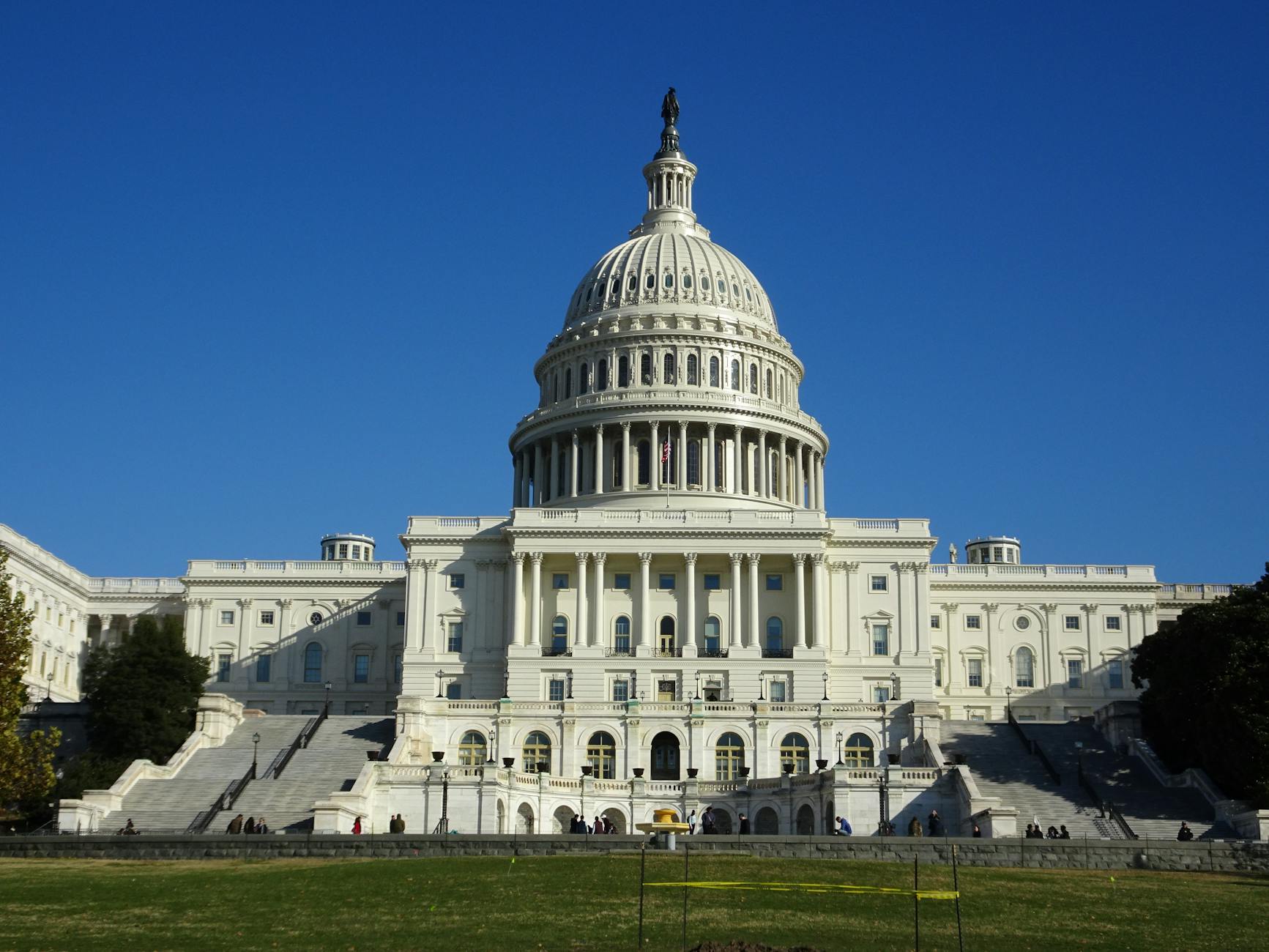
As night fell on the Capitol, the building glowed in its familiar way: majestic, fragile, and under vague review by multiple oversight bodies.
Inside, one veteran member summed up the mood as colleagues refreshed news alerts about Trump’s court calendar, scanned Supreme Court previews, and skimmed intelligence briefings on China and Iran while discreetly checking whether their own names had appeared in any headlines.
“History will judge us,” he said, “but frankly, I’m more worried about the ethics committee. They’re faster.”
Reality Check
Multiple U.S. lawmakers have recently resigned amid various scandals, and this article riffs on a report noting that a third member of Congress has stepped down as misconduct stories pile up. The real news highlights growing ethical and legal troubles on Capitol Hill, adding to broader political turmoil involving court cases, Supreme Court battles, and foreign policy tensions. While the characters, quotes, and specific “programs” in this piece are fictional, the broader concern about repeated congressional scandals and declining public trust is very real.
Satire disclaimer: This article is satire and parody. It is not factual reporting.
Original source: South China Morning Post
Image credit: Natalia FaLon — source. Show a visible credit link to Pexels on the site.