

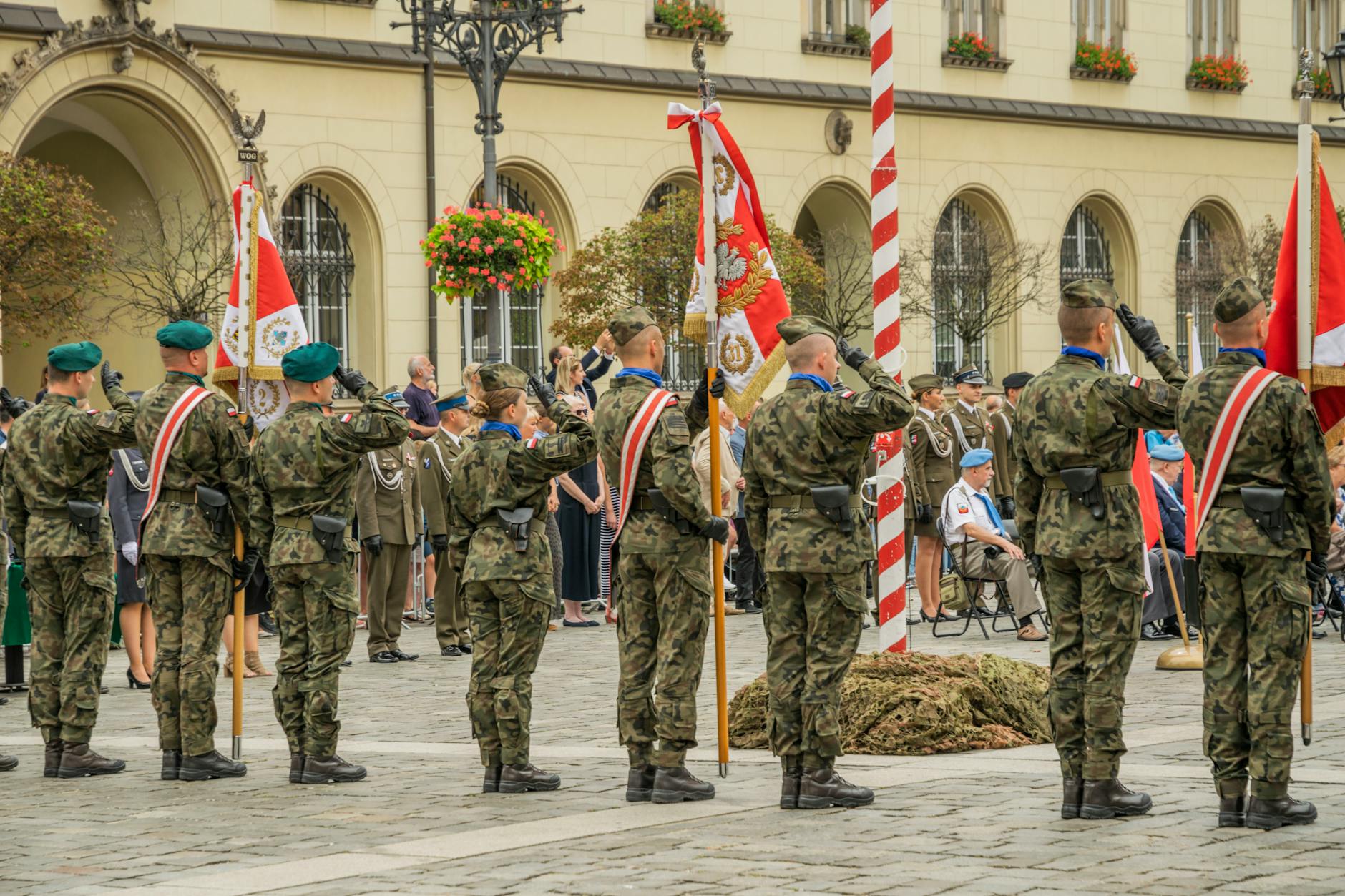
Allies will now be ranked somewhere between “Strategic Sweetheart” and “Disappointment With Flag,” bringing scientific precision to transatlantic passive-aggression.
In a bold step toward modernizing 20th‑century alliances with 3rd‑grade classroom management strategies, the White House has reportedly developed a “naughty and nice” list for NATO allies, ranking each country by how enthusiastically it funds other people’s wars.
What started as an internal “engagement tool,” officials say, has quickly become the administration’s preferred way to conduct foreign policy: color‑coded spreadsheets, seasonal moral judgment, and the faint but constant threat of public shaming.
The Transatlantic Behavior Chart
According to multiple officials familiar with the matter, allies are sorted into three main tiers: “Nice” (sends weapons quickly, pretends not to read the fine print), “Needs Encouragement” (sends helmets, asks questions), and “Naughty” (asks where this is all going and whether there’s an endgame).
Each country is reportedly assigned a composite score factoring in “defense spending, speed of arms transfers, tone of statements, and overall vibe.” One aide clarified that “vibe” covered “non‑verbal support signals like clapping at the right time and not sighing audibly during secure video calls.”
“This is about accountability,” said one senior administration official, speaking on background while carefully marking up a printed Excel sheet with red and green Sharpies. “If you want Article 5 protection, maybe don’t be a December‑only friend.”
In what appears to be a first for NATO, some rankings were reportedly accompanied by emojis. Germany’s entry was flagged with the “nervous smile” face, while Hungary received what one diplomat described as “the digital equivalent of a long, disappointed stare.”
“We used to measure burden-sharing with complex defense indices,” said a retired U.S. diplomat. “Now it’s basically, ‘Who gets invited to the sleepover and who has to go home after dinner?’”
Officially, It’s About “Synergized Behavioral Forecasting”
Publicly, the White House insists the list is simply “a dynamic internal tool for synergized behavioral forecasting in a multi‑theater security environment.”
Translated into English, this means: “We want to know who’s going to ghost us the minute things get awkward.”
In an “official explanation” circulated to U.S. embassies, the administration reportedly described the new system as:
“A holistic, seasonally adaptive assessment framework leveraging heritage holiday metaphors to incentivize kinetic generosity and discourage strategic foot‑dragging across the Euro‑Atlantic space.”
Ambassadors were also given talking points emphasizing that “naughty” does not imply moral failure, only “insufficient enthusiasm for other countries’ legislative deadlines.” If pressed, they are advised to pivot to “shared values,” “historic partnership,” and, if necessary, “the weather.”
One European foreign minister, after a briefing on the rankings, reportedly responded, “So to be clear, we are not in trouble with NATO. We are in trouble with Santa?” The American official replied, “With respect, Minister, in this metaphor, we are Santa.”
Congress Wants In, Trump Wants Credit, Everyone Wants Leverage
News of the list immediately ricocheted through Washington, where elected officials—having long ago outsourced policy to vibes—are demanding access.
Several members of Congress have reportedly requested a classified briefing on where key allies rank. One senator on the Armed Services Committee is said to be considering legislation tying future U.S. aid to “improvement on the naughty‑nice spectrum by at least one holiday category per fiscal year.”
Former President Donald Trump, upon hearing about the list, allegedly told advisers it was “his idea,” explaining that he had “always said the problem with NATO is not enough lists about NATO.” A person close to Trump said he was “extremely interested” in whether Germany is still “a very bad payer or just an okay payer, which is worse, by the way.”
Meanwhile, European officials are quietly gaming out the downstream implications. One diplomat from a smaller NATO country, speaking anonymously, worried that their government was “one awkward abstention away from being moved from ‘Nice’ to ‘This Call May Be Recorded for Training Purposes.’”
“We can’t raise defense spending overnight,” the diplomat said. “But we can clap more energetically at joint press conferences. Does that help our score?”
Escalation: Introducing the NATO Advent Calendar
In a move that several officials described as “perhaps one brainstorm too far,” the White House reportedly considered complementing the naughty‑nice list with a “NATO Advent Calendar of Deliverables.”
Under the proposal, every day of December a new square would open on a shared digital dashboard, revealing a “suggested contribution” for participating allies: a pallet of artillery shells here, a sanctions package there, maybe a robust statement about “unwavering resolve” with no specific commitments inside.
Several European governments objected, not on principle, but because they feared the calendar would inevitably leak and be turned into a TikTok filter.
Undeterred, some aides floated additional gamification. Ideas under discussion reportedly included:
• “Gold Star Ally” badges for governments that approve arms transfers in under 48 hours
• A quarterly “Supreme Allied Friend” leaderboard
• Secret penalties for countries that cite “domestic politics” more than three times per meeting
One staffer proposed a “NATO Escape Room” for under‑performing allies, in which defense ministers must solve a series of puzzles to find the political courage to increase spending above 2 percent. The suggestion was rejected only because, as one official put it, “that hits a little too close to home.”
Global Stakes, Schoolyard Tools
Outside the West Wing, foreign policy analysts are gently pointing out that ranking sovereign states like misbehaving toddlers might not be the most dignified approach to managing a nuclear‑armed alliance amid wars, Iranian brinkmanship, and a U.S. Supreme Court periodically redefining the limits of presidential power.
“In an environment where Congress can’t pass a budget without threatening a global recession, and the courts may decide at any moment whether presidents can ignore laws they find inconvenient, it’s a bit rich to tell other countries they’re on the naughty list for hesitating,” said one think‑tank researcher, who asked not to be named because they still need grant money.
The White House, for its part, is reportedly pleased with the system’s clarity. “Allies always say they want transparency,” one official remarked. “This is transparency. If they didn’t want to be evaluated, they shouldn’t have joined an alliance based on mutual defense and constant judgment.”
Pressed on whether the United States ever appears on its own list, the official paused. “No,” they said. “We are the one doing the listing.”
As year’s end approaches and leaders prepare to gather for the next NATO summit, murmurs in diplomatic circles suggest one question is already dominating corridor gossip: not what the strategy is, or how to prevent another crisis, but who will arrive in the coveted status of “Nice”—and who will be quietly seated at the far end of the family table.
Because in the 21st century, nothing says “rules‑based international order” quite like a superpower sliding a laminated behavior chart across the Atlantic and asking, with complete seriousness, who wants to earn a sticker.
Reality Check
Reports indicate the Biden White House has drawn up an internal “naughty and nice” style list of NATO allies, ranking them by how much military aid and support they’re providing—particularly regarding conflicts like the war in Ukraine. The idea, according to those reports, is to pressure lagging allies and reward more generous ones. It’s part of broader U.S. efforts to push NATO members toward higher defense spending and faster military assistance, amid mounting geopolitical crises. The satire above exaggerates this into a literal behavior chart, but it’s rooted in real concerns over burden‑sharing and U.S. leverage inside the alliance.
Satire disclaimer: This article is satire and parody. It is not factual reporting.
Original source: thecradle.co
Image credit: SHOX ART — source. Show a visible credit link to Pexels on the site.