

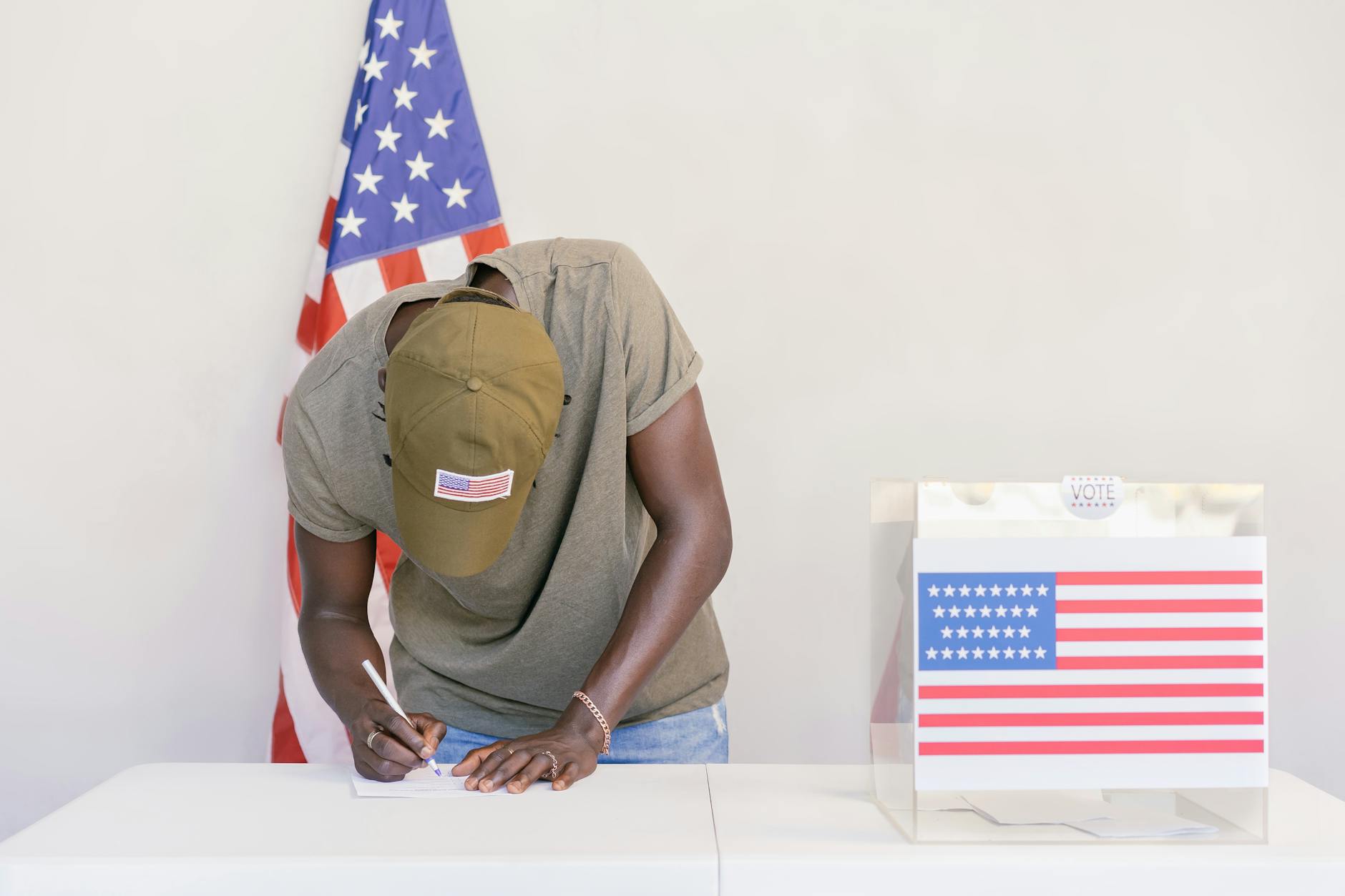
As 2026 looms, the Peach State is once again split between democracy, vibes, and whatever Trump just posted about China at 3:11 a.m.
According to the latest New York Times polling, the 2026 Georgia Senate race is now a statistical tie between the Democratic incumbent, the Republican challenger, and “Whatever That Was Last Time, But Faster.” While the Times pollsters insist their work is “methodologically sound,” the topline finding is that Georgians have stopped answering questions and started asking them back.
“When a voter responds, ‘Well what do you think about Iran, MSN, China, and my cousin’s Facebook memes?’ that technically counts as engagement,” explained one pollster, freshly returned from what he described as “a seven-hour phone call that turned into a prayer circle and a debate about gas stoves.”
Polling in the Age of Perpetual Runoffs
Georgia, still recovering from the spiritual marathon of the 2020 and 2022 runoffs, now treats every election as a seasonal miniseries with diminishing but stubbornly persistent viewership. The 2026 race features familiar themes: apocalyptic fundraising emails, cryptic Trump endorsements, and candidates forced to address foreign policy by people who think “the Times” is a sorcerer and “.com” is a Deep State code word.
The Republican frontrunner has already promised to “get tough on Iran, woke banking apps, and any globalist domain name ending in dot-com,” while the Democrat has responded with a $28 million ad buy assuring voters he has “never once opened Microsoft MSN on purpose.”
“I just want someone who’ll keep Social Security, fix I-285, and stop explaining China to me using arrows and red yarn,” said Atlanta voter Tiana Brooks, who hasn’t missed an election since 2018 and now keeps her “I Voted” stickers in a three-ring binder organized by runoff.
The Times poll found 41% of voters support the Democratic incumbent, 40% back the Republican challenger, 8% chose a Libertarian whose platform is “Please Stop Asking Me About Trump,” and the remaining 11% told the caller they were “still protesting the 2020 College Football Playoff committee.”
Trump Endorses Georgia, China Politely Declines
Donald Trump, who is not on the ballot but is spiritually listed in every race as “Other: Strong Opinions,” has already declared the 2026 Senate contest “the most important, most rigged, most beautiful election ever held anywhere, especially Georgia, which I won twice, maybe three times, we’re still looking into it.”
His endorsement strategy so far has been to post increasingly long messages connecting the Georgia race to Iran, China, Hunter Biden’s laptop, and a blurry screenshot of an MSN homepage from 2004 that a staffer apparently printed out and highlighted.
“These polls, they’re fake like the failing New York Times dot com, but also, when we win them, they’re tremendous,” Trump said in a phone interview conducted entirely in capital letters. “Georgia knows we have to stop China, which is basically running CNN, probably the Times, and maybe the Waffle House menu too, we’re looking at that.”
China, which has not expressed any views on the Georgia Senate race, was nonetheless dragged into the conversation after the Republican candidate vowed to “stop Beijing from owning our farmland, our apps, and our Peach Bowl halftime shows.” The campaign later clarified that this was a reference to “foreign influence in general, not any particular country, except the ones that poll well with our base.”
Iran joined the storyline after an outside group aired an ad suggesting that if the wrong candidate wins, “Tehran will personally redraw Georgia’s congressional maps using an old copy of Encarta and a dial-up MSN connection.” Analysts agreed the scenario was “geopolitically incoherent but emotionally resonant.”
The Official Explanation (Such as It Is)
Faced with confusion over why Georgia voters are being asked about Iran, Trump, China, and an internet service most of them stopped using during the Bush administration, state officials offered a calm, detailed, and thoroughly unhelpful response.
“To streamline the democratic process, Georgia has consolidated all issues—domestic, foreign, and metaphysical—into one convenient Senate race,” read a joint statement from the Secretary of State’s office and something called the Bipartisan Committee on Voter Exhaustion. “This allows citizens to express nuanced opinions on global hegemony, nuclear proliferation, and local zoning laws with a single, easily miscounted ballot.”
The statement further clarified that any references to “Times” in the polling questions “may refer to The New York Times, the times we live in, or biblical end times, depending on voter ideology and cable news intake.”
When asked why “.com” was mentioned so frequently in campaign speeches, one consultant offered a simple clarification: “We polled it. The base thinks ‘dot-com’ sounds techy and ominous, like something China would do to your children’s math curriculum.”
When Things Got Weird, Georgia Just Kept Going
As Election Day 2026 creeps closer, campaigns have adopted increasingly baroque strategies to move the needle in polls that haven’t changed since the Super Bowl that nobody remembers.
The Democratic incumbent released a “fact-checking sermon” explaining that no, the Georgia Senate does not set foreign policy with Iran, and no, the New York Times “does not secretly program your thermostat, even if it feels like that sometimes.” The Republican challenger countered with a “Truth Rally” featuring a PowerPoint titled, “China, Commerce, and Why Your Niece Is Studying Mandarin Instead of Working at Publix.”
In a moment that pollsters are calling “the escalation point,” both campaigns accidentally booked rallies at the same suburban Atlanta parking lot, resulting in a bizarre megamix of political messaging. One side blasted a Trump remix of “God Bless the U.S.A.” while the other projected a live New York Times polling tracker onto the side of a mattress store. A lone volunteer silently handed out flyers about the Iran nuclear deal to people who were just trying to get to Costco before it closed.
“I came for paper towels and left with three yard signs, a QR code for voter registration, and an email from the Times asking if I’d ‘share my thoughts on democracy in a brief 47-minute survey,’” said Cobb County resident Marcus Hale. “I’m not even sure which party I donated to, but someone definitely has my debit card now.”
By mid-afternoon, an impromptu “Undecided Voters Tailgate” had formed at the edge of the lot, where citizens debated whether it was more responsible to read the Times’ polling methodology or to just ask their group text what to do. The only consensus was that everyone, regardless of party, blamed “the media” for something, though opinions varied widely on what that something was.
Suburban Basement, National Stakes
In theory, this is a contest over one Senate seat. In practice, it’s become a national Rorschach test projected onto Georgia, a state that wanted better sports outcomes and instead received permanent front-row status in America’s ongoing nervous breakdown.
Democrats insist control of the Senate—and thus the future of judges, climate policy, and health care—may once again hinge on suburban voters in a few Atlanta-area ZIP codes where the HOA Facebook page is already a war zone. Republicans are equally certain that Georgia is the frontline in a sweeping crusade against “elite globalist tech-media-bureaucrats with suspiciously coherent sentence structure.”
The Times, for its part, has responded to criticism of its polls by adding more charts. These include a “Persuadability Index” showing how likely a given voter is to change their mind, and a “Trump-Adjacency Thermometer” measuring the degree to which a candidate mentions the former president when asked about grocery prices.
One internal chart, leaked to no one in particular, reportedly categorizes Georgia voters into key segments: “Runoff Veterans,” “Mail Ballot Truthers,” “People Still Mad About Sherman,” and “Tired.” The last group currently holds a commanding majority.
Reality Check
The real story behind this satire is that The New York Times is tracking and publishing polling data on the upcoming 2026 U.S. Senate race in Georgia. These early polls aim to measure how potential candidates and parties are performing in a key swing state that has been central to recent national elections. As with all early polling, numbers can shift significantly as the race develops and actual candidates, issues, and national dynamics become clearer.
Satire disclaimer: This article is satire and parody. It is not factual reporting.
Original source: The New York Times
Image credit: Mikhail Nilov — source. Show a visible credit link to Pexels on the site.