

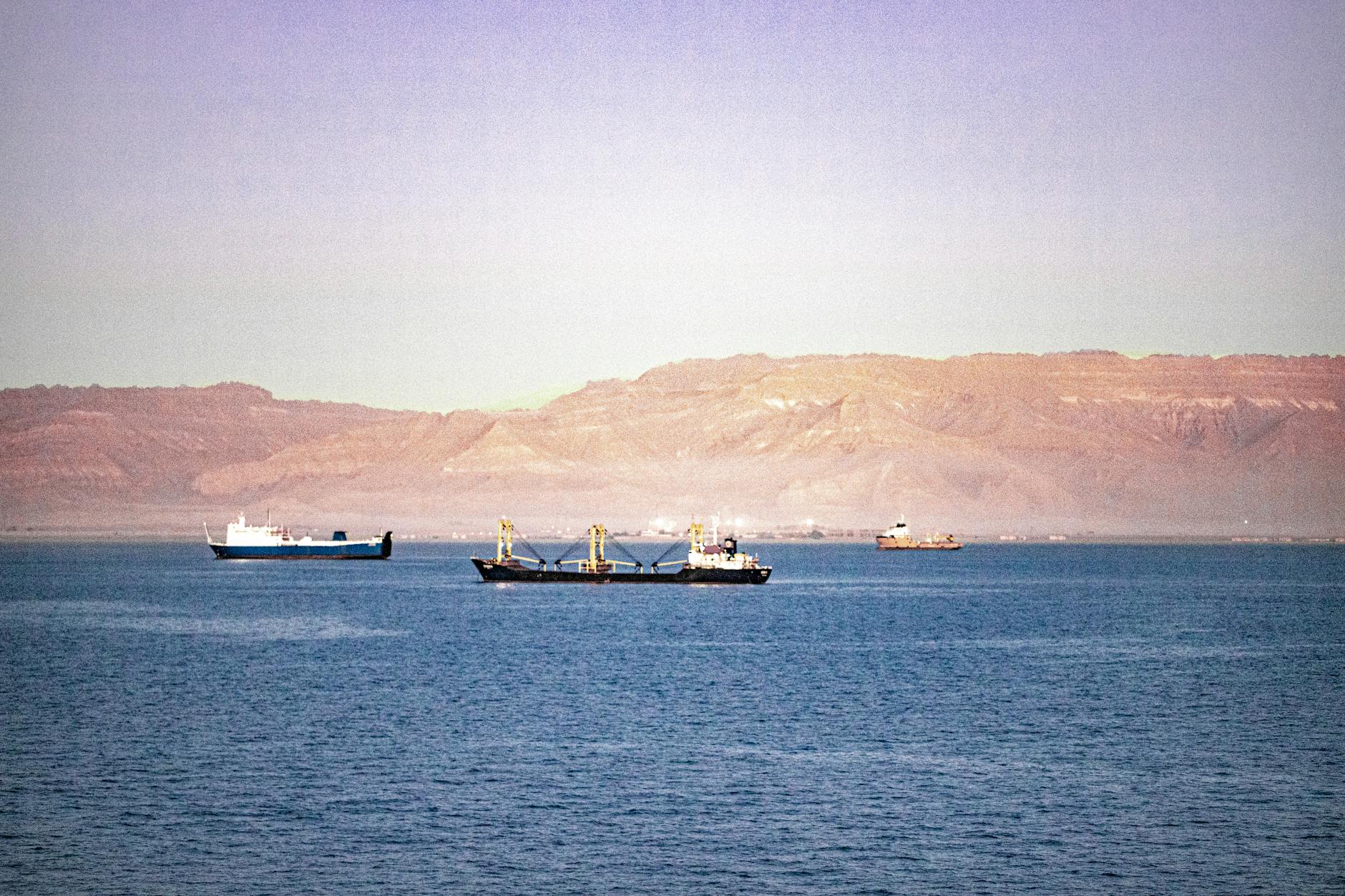
A completely reasonable response to an unreasonable political news cycle.
In the latest installment of the long-running series “Global Energy Held Hostage By Geography,” Iranian officials suggested that if Washington insists on maintaining what Tehran describes as a “blockade,” Iran will respond by shutting the narrow waterway that keeps the world’s oil market marginally less hysterical than its stock market.
Everyone Threatens To Blink At The Same Time
Iranian state media said the country reserves the right to take “decisive action” in the Strait, a statement that in this context is widely understood to mean “we know where your tankers sleep.” Western officials, while alarmed, maintained their traditional poker face, which has recently been rebranded as “strategic ambiguity” after polling found “clueless but confident” tested poorly with voters.
“Let me be clear: freedom of navigation is non-negotiable,” said one unnamed U.S. defense official, speaking on background because, technically, this is all supposed to look like it’s under control. “At the same time, we are fully committed to avoiding escalation and will therefore be escalating our commitment to non-escalatory escalation.”
According to regional analysts, the brinkmanship follows a familiar pattern: Iran signals it might close Hormuz, oil markets spike, U.S. officials issue calm yet urgent statements, and European foreign ministers pretend they have leverage.
“We are gravely concerned and will be expressing this concern in a firmly worded communiqué that nobody will read,” said a fictional but highly plausible EU diplomat, shuffling a stack of pre-drafted statements labeled “Very Troubling,” “Deeply Troubling,” and “Existentially Troubling, But Still No Action.”
In Tehran, officials insist their threats are purely defensive, designed to protect Iranian sovereignty, deter aggression, and make sure oil traders never sleep again.
The World’s Most Valuable Shipping Lane, Now A Group Project
The Strait of Hormuz is, in practical terms, the world’s most important nautical hallway, a narrow corridor through which supertankers, warships, and occasional diplomatic crises must politely squeeze past each other. For decades, the unwritten rule has been: anyone can threaten to close it, as long as they do it just enough to rattle prices but not enough to actually test insurance coverage.
Energy experts say the current standoff risks turning the strait from a “critical artery of global trade” into “that one highway where one fender-bender ruins the entire day for 20 countries.”
Still, both Washington and Tehran insist that they are merely defending stability by creating as much instability as humanly possible without triggering a formal war.
“The United States is not escalating; we are simply deploying additional non-escalatory assets in an escalatory-shaped formation,” another fictional U.S. naval spokesperson explained. “These deployments send a message of reassurance to our allies and a message of deterrence to Iran, while sending a message of ‘buy options’ to commodities traders.”
Iran, for its part, framed its position as a public service.
“We are prepared to ensure that all countries share equally in the consequences of policies that target Iran,” said a real-sounding Iranian Revolutionary Guard Corps commentator on state television. “Why should only our economy suffer when we have this very convenient sea-based equalizer?”
The Absurd Official Explanation Everyone Pretends Makes Sense
To calm markets, a joint “clarification” was quietly circulated among diplomats, describing the stand-off as a “temporary, dynamic reconfiguration of maritime accessibility.” In this official explanation, no one is threatening to close anything; instead, the region is “exploring alternative navigational expectations pending holistic de-escalation outcomes.”
Translated from International Bureaucratic, this means: yes, someone might close the strait, but if they do, we will downgrade it from “closure” to “unplanned, freedom-focused pause.”
Under the same logic, U.S. naval buildup is not a show of force but a “floating deconfliction environment,” while Iranian missile deployments are labeled “shore-based persuasive infrastructure.” According to diplomats, this language is essential because it allows all sides to insist nothing irreversible has happened, right up until something irreversible happens.
When Escalation Needs Just A Little More Escalation
As tensions rose, both countries reportedly convened emergency meetings to coordinate exactly how close to disaster they could get without technically falling into it. The Pentagon’s internal risk chart was updated from “concerned” to “very concerned but still holding press briefings,” while Iranian officials declared the situation “critical, but also an opportunity for meaningful resistance-branded messaging.”
In a development described by insiders as “inevitable,” oil prices jumped on the news, soared on the rumors about the news, dipped on reassurances that everything was fine, and then jumped again when traders remembered nothing is fine.
The situation escalated further when a leaked draft statement from an emergency G7 call revealed that world leaders were prepared to “strongly urge restraint,” “deeply underscore the importance of dialogue,” and, if that failed, “convene an even more serious virtual meeting.”
Meanwhile, a coalition of major energy importers announced they were “monitoring the situation closely,” which historically has been the international equivalent of putting on noise-cancelling headphones and hoping the Middle East doesn’t start trending again.
Financial markets, for their part, now treat the phrase “Iran threatens to close Hormuz” the way Californians treat “minor earthquake”: concerning, but also a useful reminder to refill emergency spreadsheets.
The Problem With Living On A Planet That Needs Oil
Beneath the theatrics, the underlying problem remains stubbornly unfunny: the global economy is still built on a fuel source that passes through a waterway narrow enough to make shipping magnates mutter, “This seems… suboptimal.” Every few years, the world is reminded that a single geopolitical argument in one narrow sea lane can decide whether people in faraway suburbs pay a little more for gas or start Googling “how bad is it to commute by scooter.”
The United States insists its actions are about protecting “freedom of navigation,” a phrase that, in practice, tends to refer primarily to the freedom of U.S.-aligned tankers to navigate wherever they like. Iran counters that it will not accept being economically strangled while that same freedom of navigation delivers everyone else’s money away from it on time.
Each side explains its moves in the language of international law, security, and deterrence, while everyone else quietly notes that the phrase “maritime security” often functions as a polite way to say “your domestic politics, but with warships.”
For now, the strait remains open, the warships remain “postured,” and the world remains surprised each time it remembers that its energy lifeline runs directly through the middle of one of the most combustible political neighborhoods on Earth.
Diplomats express confidence that tensions will eventually “cool,” at least until the next sanctions package, drone incident, tanker seizure, or poorly timed election speech, at which point the planet will once again remember that its economic future can be blocked by a country deciding it’s had enough—and a geography test question none of its leaders actually passed.
Reality Check
The real story: Iran has warned it may move to close or disrupt traffic in the Strait of Hormuz if the United States continues what Tehran characterizes as a naval “blockade” and pressure campaign. The strait is a vital global chokepoint through which a significant share of the world’s oil shipments pass, so such threats routinely rattle energy markets and raise fears of wider conflict. U.S. officials typically frame their presence in the area as protecting freedom of navigation and deterring Iranian aggression, while Iran argues it is responding to economic and military pressure.
Satire disclaimer: This article is satire and parody. It is not factual reporting.
Original source: The Punch
Image credit: Eric Seddon — source. Show a visible credit link to Pexels on the site.
[…] Strait Of Hormuz Threatened Again As U.S. And Iran Resume “What Are You Going To Do About It” Ph… […]