

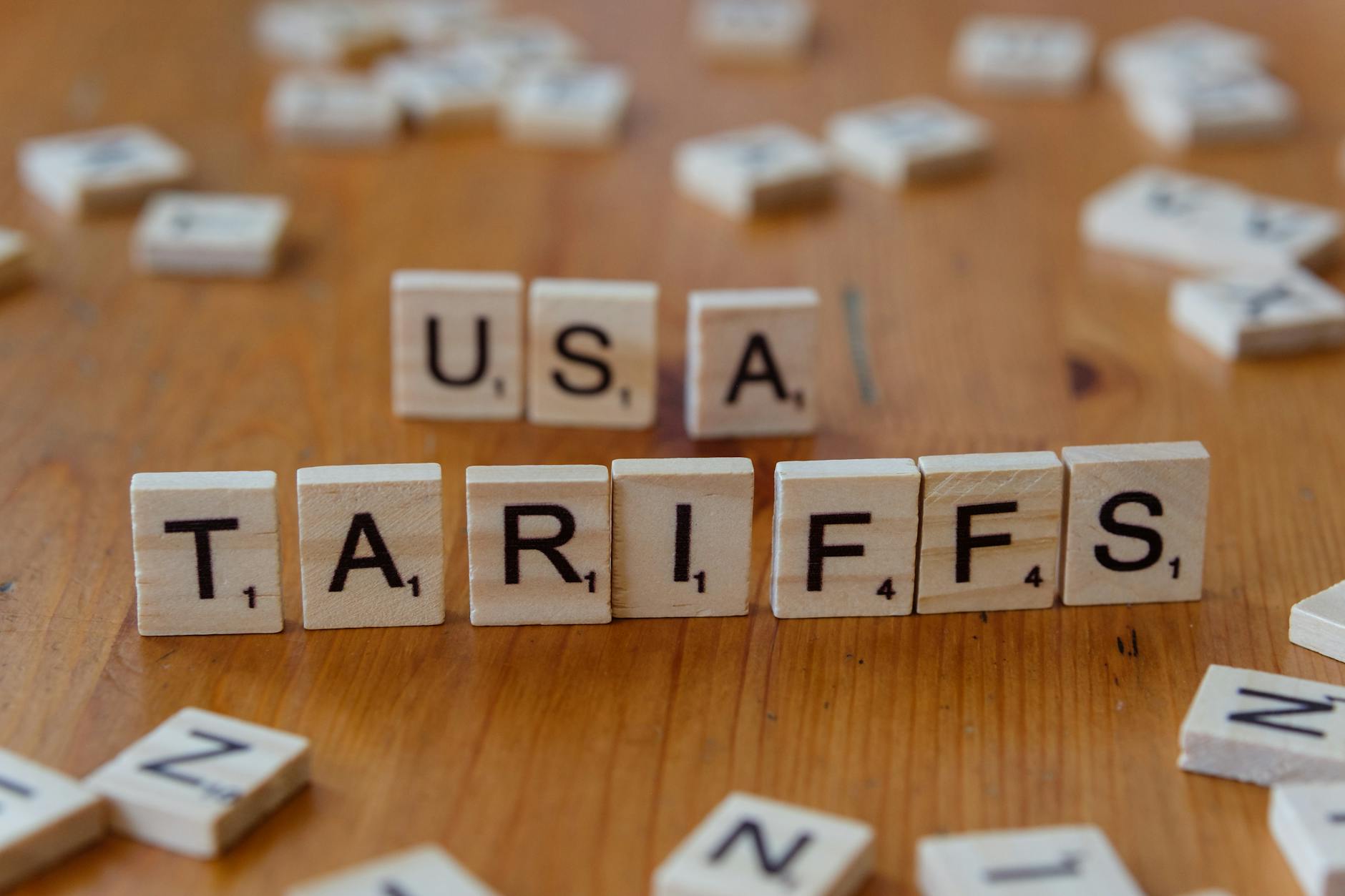
A completely reasonable response to an unreasonable political news cycle.
American importers are flocking to claim refunds on Trump-era tariffs recently struck down by the U.S. Supreme Court, launching what economists are already calling “the first federal stimulus program targeted exclusively at people who read customs paperwork for fun.”
The decision, which effectively ruled that the administration’s trade war was less “strategic economic realignment” and more “guy mashing buttons on a slot machine labeled CHINA/IRAN/EU,” has opened the door for businesses to request billions in refunds. In related news, the phrase “retroactive economic justice” is trending among corporate lobbyists, tax attorneys, and exactly one very confused social activist.
Businesses Discover Government Error, Assume Typo
For years, businesses quietly paid the Trump tariffs, convinced that someone, somewhere, had a spreadsheet proving it all made sense. That illusion began to crumble when the Supreme Court suggested that perhaps the executive branch could not simply wake up one morning, shout “NATIONAL SECURITY,” and slap a surcharge on Belgian waffle irons destined for Nevada.
“At first we thought the refund notice was a scam,” said Megan Rowe, CFO of a mid-sized Las Vegas appliance importer. “We get emails all the time saying the government has money for us. Usually it’s PPP forgiveness, or a guy from ‘US Treasury Department’ using a Gmail address. But then our lawyers confirmed the Supreme Court actually agreed with us for once. That’s when we knew something was deeply wrong.”
According to trade attorneys, the refund process is simple: businesses file claims, wait several months, and then receive a carefully calculated check for the exact amount owed, minus any interest, plus the lingering sense that they’ve been involuntary participants in a four-year macroeconomic improv class.
In a rare moment of humility, one importer admitted this was not how they expected the Trump-era trade saga to end. “We thought we’d get a new factory,” he said. “Instead, we got a partial refund and a lesson in constitutional law. I can’t put that on a shipping container.”
The Treasury’s Official Explanation (Such as It Is)
The Treasury Department, caught off guard by the sudden wave of refund requests, released an official explanation that cleared up absolutely nothing.
“Due to the Supreme Court’s ruling, certain tariffs previously classified as patriotic are now reclassified as oops,” the statement read. “Eligible businesses may apply for refunds on duties collected pursuant to these measures, unless the underlying imports are covered by separate statutory authorities, a clerical error, or vibes.”
Pressed to elaborate on what “vibes” meant in this context, a senior Treasury official explained, off the record, that some tariffs were “anchored in a metaphysical assessment of trade imbalances” and would therefore remain in place “until the chi between Ohio and Guangzhou is properly aligned.”
Meanwhile, the Office of Management and Budget is reportedly scrambling to adjust future revenue projections, quietly replacing several optimistic numbers with the phrase “lol no.”
From Trade War to Cashback Rewards
On Wall Street, the ruling has sparked a new marketing trend: “Tariff Cashback Programs.” One major bank announced a limited-time “Trade War Rewards” card that offers 2% back on all purchases and 4% back if the Supreme Court later decides those purchases were unconstitutional.
“We’re entering a golden age of retroactive policymaking,” said one lobbyist for a multinational retailer importing from China. “Why fight regulations in advance when you can just wait, sue, and get a check later? It’s like Amazon returns, but for statutes.”
The situation escalated further when several companies suggested Congress create an official “Refund Calendar” so businesses can plan around which policies will be overturned five to ten years later.
“If I’d known the tariffs would get knocked down, I wouldn’t have raised prices,” said one manufacturer, pausing before adding, “Actually, that’s not true, I absolutely would have. But I might have raised them with more self-awareness, and that counts for something.”
Legal scholars point out that this is the predictable endgame of governing-by-executive-proclamation. When one administration treats international trade as an angry Yelp review of China and Iran, and the next treats it as a to-do list to undo, the only consistent winners are people who bill by the hour.
The Judiciary’s New Role: National Refund Department
The Supreme Court, having already taken on the roles of moral arbiter, election referee, and occasional climate policy committee, is now informally being described as the nation’s “Refund Department for Overcaffeinated Presidents.”
“We don’t set economic policy,” a fictional clerk was overheard insisting in the hallway. “We just tell the executive branch when it’s wandered from ‘questionable’ into ‘you literally can’t do that.’ The refunds are a side effect, like when you fix a busted pipe and discover three gallons of water sitting in someone’s living room.”
In a telling development, several law schools are considering offering a new course: “Constitutional Law VI: How to Get Your Money Back.” The curriculum reportedly includes modules on separation of powers, administrative law, and the proper etiquette for emailing the federal government to ask, “So, about that $40 million you took from us in 2019…”
China, Iran, and the Great American Shrug
The countries once portrayed as existential trade threats are taking the news with polite confusion. China’s Ministry of Commerce issued a statement noting that while the U.S. now admits some tariffs were legally dubious, it still maintains others on entirely different grounds, thus preserving the sacred Washington tradition of “we’re technically consistent if you squint.”
Iran, dragged into the original trade rhetoric more as a vibes-based villain than a supply-chain reality, released a brief message asking whether it, too, might be eligible for back pay given the number of times it has been invoked to justify unrelated domestic policies.
“We are not certain how your Supreme Court works,” a fictional Iranian trade official said. “But if it is now issuing refunds for bad decisions made during emotional episodes, we would like to submit a list.”
Experts note that the underlying logic of the trade war remains largely untouched: the U.S. still wants to be “tough on China” in a way that looks good in campaign ads, punishes domestic importers just enough to be noticeable but not enough to cause donor panic, and can be dialed up or down depending on polling in Wisconsin. The refunds do not so much resolve this contradiction as memorialize it in check form.
Everyone Wins, No One Admits Anything
In the end, the Supreme Court gets to reaffirm the limits of presidential power; importers get refunds; and politicians get to claim, depending on their audience, that they are pro-business, pro-worker, anti-China, anti-Iran, pro-law, anti-overreach, or simply pro-whatever-is-trending-on-MSN-at-4:30-p.m.
The only consistent loser is the idea of coherent trade policy, which now joins immigration, healthcare, and climate in the category of “things America handles exclusively through emergency press conferences and corrective litigation.”
Still, businesses are cashing their refund checks with the quiet satisfaction of people who have finally, after years of chaos, gotten something concrete out of Washington: not stability, not predictability, not a long-term strategy—just their own money back, minus legal fees.
In a twist that somehow feels inevitable, several importers have already announced that they will use the refunded tariff funds to lobby against future tariffs, completing the purest possible cycle of the modern American economy.
Having demonstrated that trade wars can, in fact, pay off—as long as you have the patience to wait for the Supreme Court to end them—business leaders are now reportedly examining other sectors of policy for opportunities. At press time, a coalition of companies was rumored to be drafting a simple, heartfelt new slogan for the era:
“Make America Refund Again.”
Reality Check
The real news: The U.S. Supreme Court recently struck down certain Trump-era tariffs, ruling that they exceeded the administration’s legal authority. As a result, affected businesses are now filing claims to recover duties they paid under those tariffs. The refunds could amount to significant sums for importers who bore the brunt of the trade measures. The broader debate over U.S. tariff policy and the use of “national security” as justification for trade restrictions is ongoing.
Satire disclaimer: This article is satire and parody. It is not factual reporting.
Original source: Las Vegas Sun
Image credit: Markus Winkler — source. Show a visible credit link to Pexels on the site.