

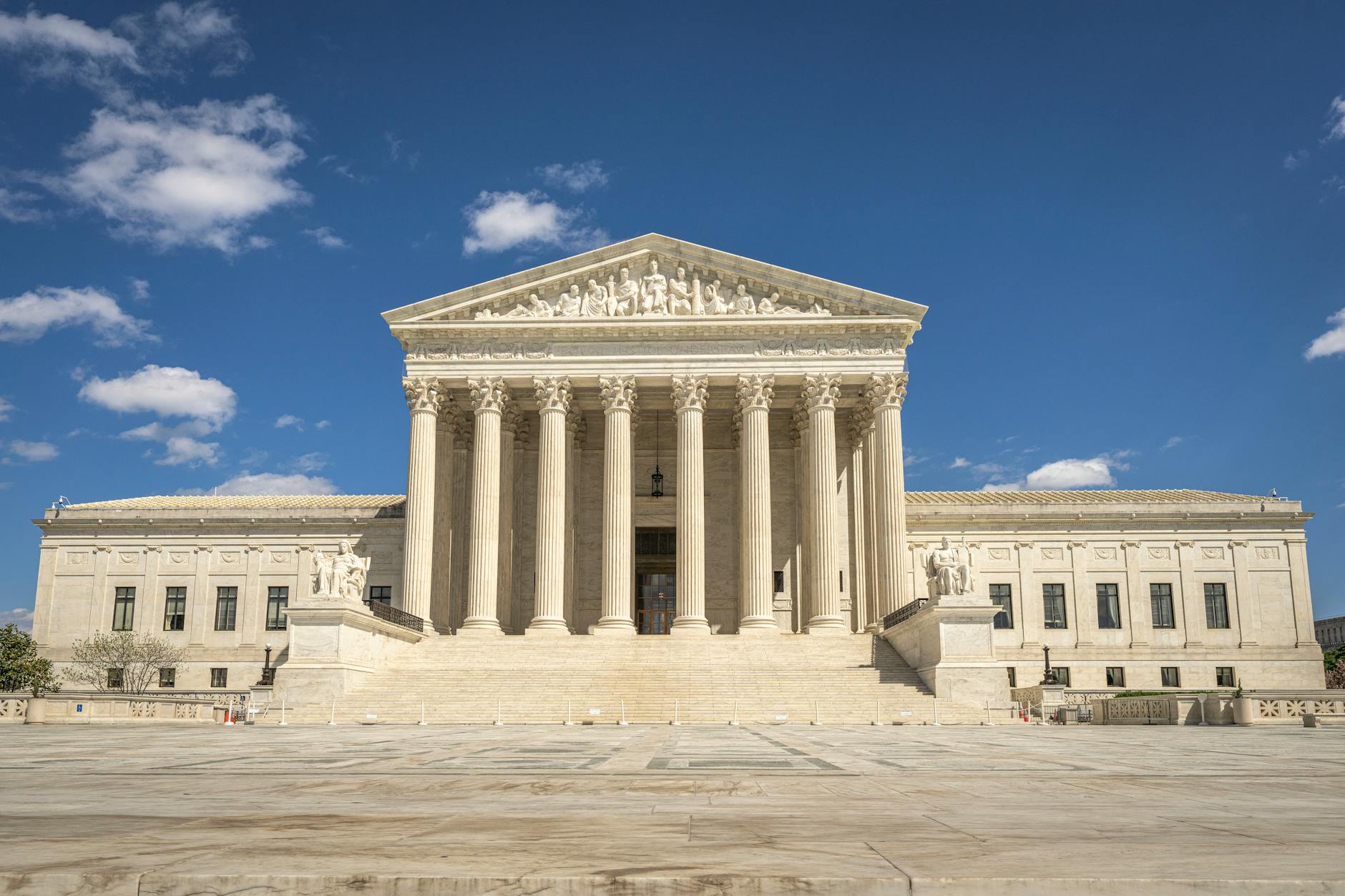
Officials said the nation’s scheduling system remains “operational but emotionally unavailable” while Washington waits to learn when democracy is supposed to happen.
WASHINGTON — The Supreme Court has not yet decided several high-stakes cases involving Election Day and Trump-era firings, prompting federal officials to place the entire concept of Tuesday under enhanced judicial monitoring.
In a statement delivered beside a trembling wall calendar, a court-adjacent official said the justices were “carefully weighing the constitutional implications of time, employment, and whether November is getting above its station.”
“The Court understands Americans want certainty,” said one fictional senior calendar compliance adviser. “Unfortunately, certainty has not submitted the proper briefs.”
Emergency Panels Convened To Determine If Days Still Binding
Congressional staffers reportedly began circulating a draft memo titled Continuity of Weekday Operations, which proposes that Election Day may remain a day, become a concept, or be referred to temporarily as “civic weather” until the court supreme process concludes.
The Senate, seeking to project competence, immediately scheduled three hearings, canceled two for procedural reasons, and accidentally created a fourth subcommittee on “Chronological Hostility by Foreign and Domestic Calendars.” China was mentioned within six minutes, according to people who left the room for coffee and returned to find a map.
“We are not saying China controls Election Day,” said a fictional Senate aide. “We are saying that if a date moves, someone should investigate whether it has a passport.”
Meanwhile, campaign operatives across both parties began quietly preparing for every possible outcome, including an election on schedule, an election postponed by footnote, and an election that occurs entirely on a secure .com portal operated by a contractor named after an eagle.
Administration Announces Firings Will Be Stored In Climate-Controlled Facility
The unresolved Trump firings cases have also generated fresh procedural confusion, with legal observers debating how much authority a president has to remove certain officials and how many lawyers are required before a firing becomes architecture.
In response, an interagency “Workforce Separation Stabilization Desk” was reportedly assembled inside a conference room previously used to store patriotic bunting. Its official explanation was concise: firings are currently being held “in a legally neutral posture” until the Supreme Court determines whether they were dismissals, administrative weather events, or “personnel jazz.”
“No one has been unfired,” said a fictional government spokesperson. “Some people are simply experiencing continued separation pending judicial clarification of the separation they already experienced.”
Campaign officials insisted the uncertainty would not affect voter outreach, though one strategist admitted the current plan involves texting supporters, “Please vote on Election Day, whenever that becomes enforceable.”
By late afternoon, Washington had achieved its preferred crisis posture: total paralysis presented as institutional seriousness. The calendar remained on the wall, under watch, emotionally unavailable.
Reality Check
The real news is that the Supreme Court has not yet issued decisions in matters involving Election Day and Trump-related firings. The cases could affect election administration and presidential authority over certain federal personnel decisions. This article is satire and exaggerates the uncertainty for comedic effect.
Satire disclaimer: This article is satire and parody. It is not factual reporting.
Original source: Midland Daily News
Image credit: Mark Stebnicki — source. Show a visible credit link to Pexels on the site.
[…] Supreme Court Delays Election Day Ruling After Calendar Files Emergency Brief […]
[…] Supreme Court Delays Election Day Ruling After Calendar Files Emergency Brief […]