

A completely reasonable response to an unreasonable political news cycle.
Beijing on Monday firmly rejected claims of involvement with an Iranian cargo ship seized by the United States in the Gulf, insisting that China has “no information, no relationship, and no particular interest in whatever that thing is,” in what experts praised as the most honest summary of global supply chains in years.
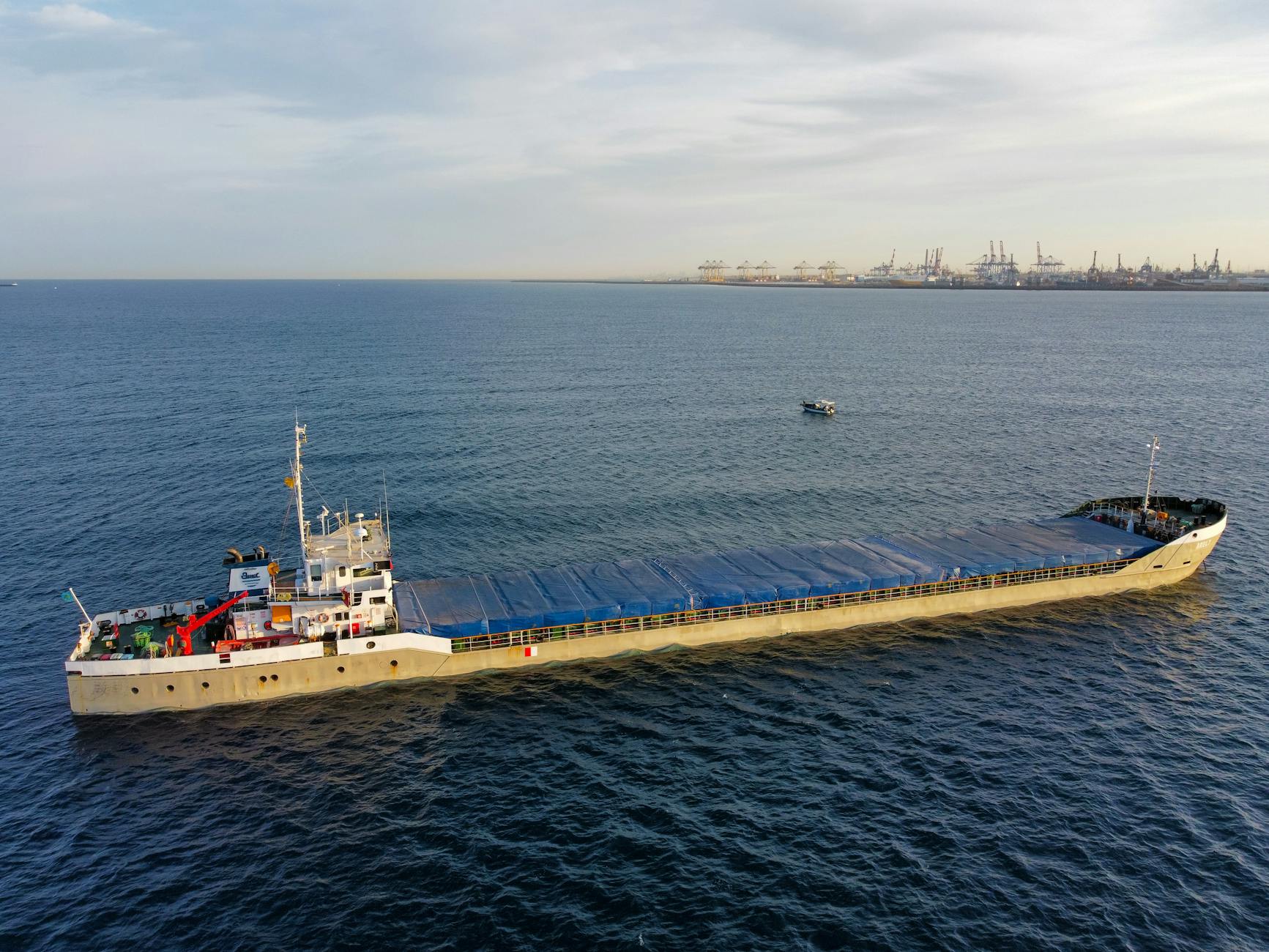
The ship, reportedly carrying “unspecified cargo of no particular concern to anyone important,” was intercepted by U.S. forces, triggering an immediate, carefully calibrated response from China’s foreign ministry: the issuance of three nearly identical denials, two contradictory clarifications, and one statement about “peace and stability” that had clearly been copied from an earlier South China Sea press release and lightly edited over lunch.
A Vessel of Unknown Origin, Sponsored by Everyone and No One
According to U.S. officials, the seized vessel had Iranian ownership, a flag of convenience from a small Pacific nation whose GDP is smaller than the ship’s insurance policy, a Hong Kong–linked management firm, and a complex corporate structure involving at least four shell companies, two PO boxes, and what appears to be a WeChat group.
China insists that none of this has anything to do with China.
“We have checked all relevant departments and can confirm this ship is not Chinese, not associated with China, and frankly, a little beneath our geopolitical dignity,” a foreign ministry spokesperson allegedly stated. “We prefer our maritime disputes to involve man-made islands, not paperwork.”
The United States, for its part, described the seizure as “a routine enforcement action” in the same tone of voice it uses when saying “this is not about oil” or “this has nothing to do with domestic politics in an election year.” Several officials highlighted that the vessel appeared connected to sanctioned Iranian entities, which in modern bureaucratic terms means the ship has at some point interacted with gravity, the ocean, or the concept of currency.
Analysts note that in an era of escalating U.S.-China tensions, merely appearing in the same sentence as Iran can trigger a minor diplomatic episode, a round of stern statements, and three bonus think tank panels on “The New Cold War at Sea: Containers, Coercion, and the Future of Freedom of Navigation.”
Strategic Ambiguity, Now Available in Maritime Edition
Pressed for details, Chinese officials described the incident as “a misunderstanding” and “a matter between other parties,” before warning the U.S. against “politicizing normal commercial activities,” a phrase that now covers everything from containerized washers to ballistic missile components labeled “tractor parts.”
“China adheres to a long-standing policy of non-interference in other countries’ shipping registries, transponder settings, and offshore holding arrangements,” said one policy adviser at a Beijing think tank. “We also do not comment on rumors, speculation, or GPS data.”
In Washington, officials stressed that the operation was focused solely on enforcing sanctions against Iran and was “absolutely not” intended to send a message to China. This was immediately undercut by a senior administration official, who, speaking off the record, explained that the seizure would also “demonstrate resolve to Beijing, reassure regional partners, and make it look like we know exactly what’s on that ship, which we definitely do, probably.”
The official explanation from all sides emerged as follows:
“The United States has seized a non-Chinese, not-even-a-little-bit-Chinese, entirely Iran-related ship that is only coincidentally intersecting with global concerns about Chinese maritime activities, and any perceived link is due solely to the natural ebb and flow of international commerce, satellite imagery, and everyone reading the same headlines.”
Markets responded positively to this clarity by doing whatever they were already planning to do.
When In Doubt, Say It’s Logistics
As more details trickled out, the situation escalated—not militarily, but in terms of narrative complexity.
First, Iranian media hinted that the ship’s seizure was “an act of piracy.” U.S. outlets countered with references to “legitimate enforcement.” Chinese state-linked commentators described the incident as “a reflection of hegemonic overreach,” while European diplomats, eager to stay relevant, described it as “concerning” and then left for another meeting about grain exports.
The ship’s disputed cargo, according to initial leaks, included “industrial materials,” “machine parts,” and “dual-use items,” the last of which historically means “things that look boring until somebody attaches them to a missile.” Every side agreed that the contents were “sensitive,” which in contemporary diplomatic language means “someone is going to pretend to be shocked when we all find out it’s exactly what we thought it was.”
“Look, everything is dual-use now,” said a former U.S. sanctions official. “You can strap a guidance chip onto anything—drones, rockets, your smart refrigerator. We’re one firmware update away from the first kitchen appliance embargo.”
China’s denial, meanwhile, grew more emphatic over the news cycle, evolving from “we are not aware of the situation” to “this has nothing to do with us” to “this is a dangerous attempt by some countries to smear China by implying that we know where all our companies’ ships are at all times, which would be wildly unrealistic.”
By late evening, an unofficial, widely shared “internal guidance” memo was circulating among regional diplomats, advising them to describe the incident as:
“a maritime security concern arising from broader regional tensions within a complex global supply chain environment in which all parties must exercise restraint, strategic patience, and robust hedging.”
In less diplomatic terms: nobody wants a fight, everybody wants leverage, and the ship is now a floating metaphor.
Everyone’s Red Line Is Beige Now
While the public debate focused on nationality and responsibility, the quieter subtext was sanctions policy—and the uncomfortable fact that enforcing those sanctions increasingly depends on deciphering a wall of ownership documents last updated just before the ship’s transponder mysteriously failed.
China’s line is simple: it supports “legitimate trade” and opposes “unilateral sanctions,” which coincidentally describes every sanction not written jointly in a room it controls.
The U.S. line is equally consistent: it will enforce sanctions “wherever necessary,” especially in international waters, near a camera, within range of a press release mentioning “rules-based order.”
In between, smaller Gulf states, ship registries, and insurance firms are quietly scrambling to determine whether they, too, “have no information about this specific vessel at this time,” while urgently deleting old emails with subject lines like “re: re: re: revised ownership structure, please ignore first two versions.”
In a development that surprised no one, a retired admiral on cable news declared the incident “a test of American resolve,” while a retired ambassador on another network labeled it “a test of Chinese restraint.” Neither was asked if it might simply be a test of how long humanity can manage global commerce by pretending we have any idea which ship belongs to whom.
As for the ship itself, it remains under U.S. control, pending further investigation, legal proceedings, and a documentary on streaming titled “Shadow Fleet: Inside the Sanctions Wars,” featuring slow drone shots and ominous cellos.
Asked whether this would damage U.S.-China relations, one regional analyst was blunt:
“Relations were already damaged. This is more like arguing over who scratched the rental car while both sides are busy setting the parking lot on fire.”
For now, Beijing will continue to insist the ship is “not Chinese in any way,” Washington will continue to insist it is “definitely Iranian in the way that matters,” and somewhere in a law firm conference room, a maritime lawyer is explaining that, technically, the vessel was owned by a holding company created in 2014 for tax reasons and then never spoken of again.
Global stability, as usual, will travel under a flag of convenience.
Reality Check
The satire above is based on a real news story: the United States seized an Iranian-linked cargo ship in the Gulf as part of sanctions enforcement, and China publicly rejected allegations that it had ties to the vessel. In reality, Chinese officials denied any connection to the ship or its cargo and criticized U.S. actions as overreach. The incident reflects ongoing tensions involving U.S. sanctions on Iran, maritime enforcement in the Gulf, and broader U.S.-China mistrust over trade and security.
Satire disclaimer: This article is satire and parody. It is not factual reporting.
Original source: Deccan Chronicle
Image credit: Lio Voo — source. Show a visible credit link to Pexels on the site.