

Aides introduced a new threat scale ranging from “fake news” to “please ask the Senate later.”
The White House moved quickly Tuesday night to resolve a conflict between intelligence assessments and presidential certainty by announcing that Iran’s remaining missile capacity would be treated as “substantial only in a technical, factual, and deeply inconvenient sense.”
The clarification followed reports that U.S. intelligence shows Iran retains a significant missile arsenal, complicating President Trump’s public claim that the threat had been largely neutralized. Rather than revise the claim, advisers unveiled a new communications doctrine under which weapons systems are considered real only after appearing on television with a chyron favorable to the administration.
Briefing Rebranded As Motivational Disagreement
Inside the fictional Situation Room, officials reportedly replaced maps, satellite imagery, and regional force assessments with a laminated card reading, “Missiles are a mindset.” The move was described as part of a broader effort to bring national security analysis in line with campaign messaging, court filings, and the president’s preferred font size.
“The intelligence community measures missiles by range, payload, and deployment,” said one imaginary senior adviser. “The president measures them by whether they interrupt a good paragraph at a rally. These are both valid systems if you stop asking follow-up questions.”
The new framework also introduced a color-coded alert system. Green means no problem. Yellow means blame China. Red means the Senate should hold a hearing long enough for everyone to forget the first sentence.
Administration allies argued the distinction was simple: Iran may have missiles, but Trump had already declared the missile problem solved, creating what one aide called “a Supreme-level conflict between reality and branding.” Legal staff were then asked whether the Supreme Court could issue an emergency stay against satellite photography.
Congress Requests A Map, Receives A Chart Of Applause
On Capitol Hill, lawmakers demanded a classified briefing and received what one committee member described as “a campaign slideshow with three arrows, two sirens, and a fundraising link.” The briefing reportedly included no new intelligence, but did feature a pie chart showing that 87 percent of “bad Iran news” can be converted into “strong leader news” if presented before breakfast.
“We asked how many missiles Iran still has,” said a fictional congressional aide. “The answer was, ‘More than zero, fewer than the media wants, and exactly enough to make this the court’s problem.’”
The episode left Washington in its preferred posture: the intelligence community pointing at evidence, the White House pointing at adjectives, and Congress forming a bipartisan working group to schedule a meeting about scheduling concern.
Markets remained calm after analysts concluded the missile capacity was serious, the messaging was unserious, and both would likely be discussed on cable news by someone standing in front of a map they had not read.
Context
Recent reports say U.S. intelligence assessments indicate Iran retains substantial missile capacity, despite President Trump’s public claims suggesting otherwise. The real story centers on the gap between official intelligence findings and political messaging from the White House.
This article is satirical commentary based on that reported disagreement and fictionalizes the reactions, quotes, and internal decision-making described above.
Satire notice: This article is satire and parody. It is not factual reporting.
Inspired by: facebook.com
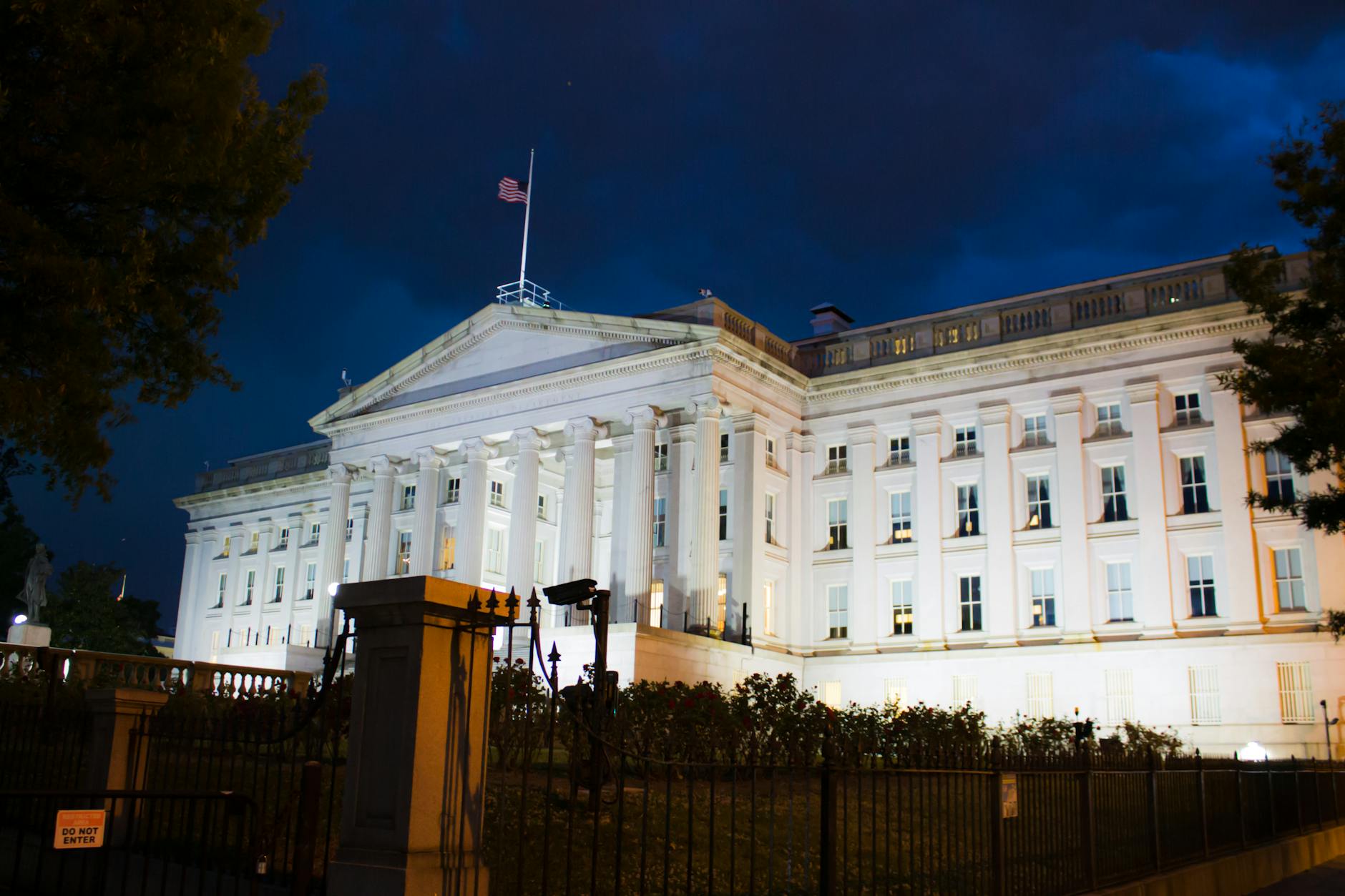
Photo: Thuan Vo
[…] White House Says Iran’s Missiles Are ‘Mostly Theoretical’ Unless Televised […]
[…] White House Says Iran’s Missiles Are ‘Mostly Theoretical’ Unless Televised […]