

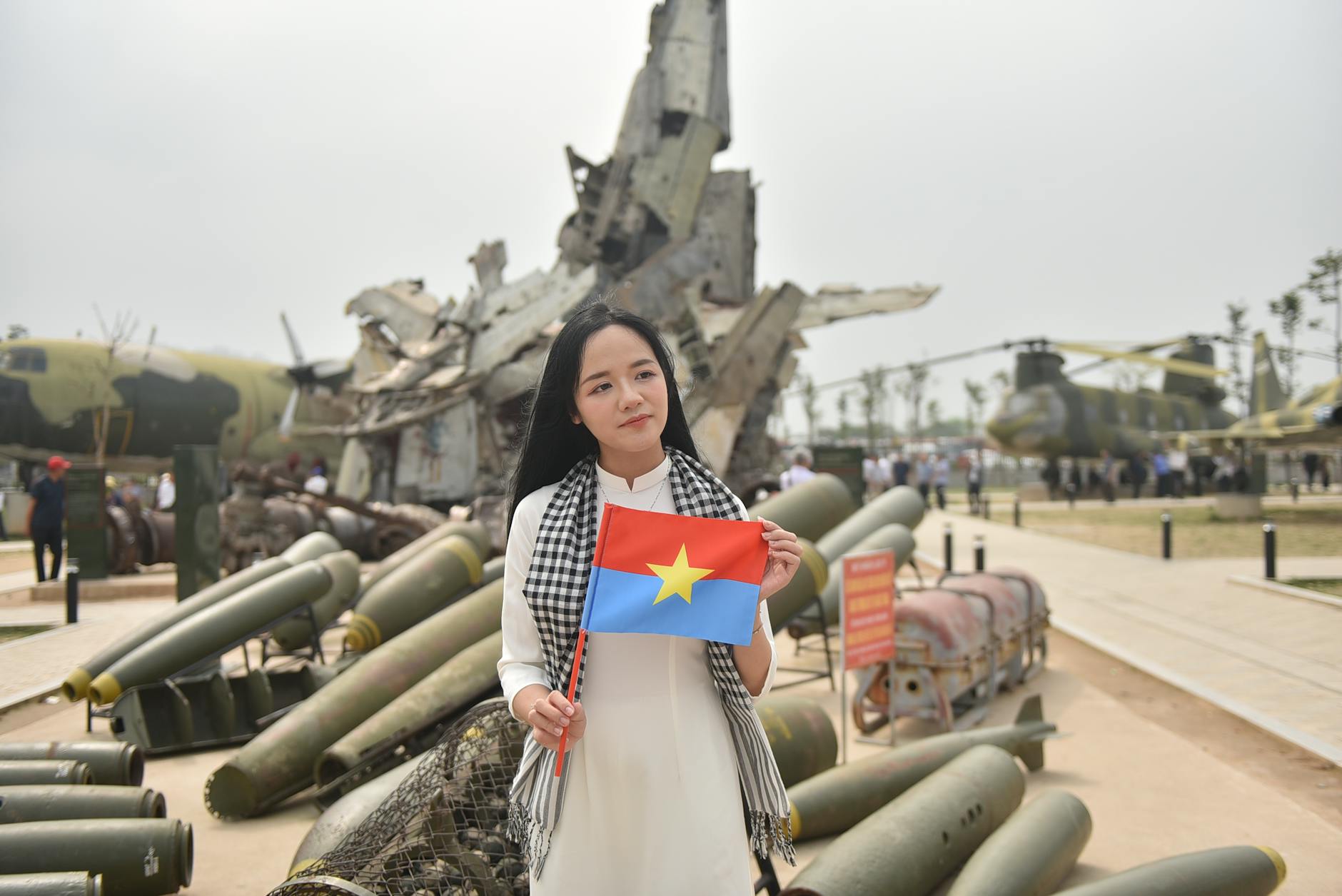
Beijing prepared three seating charts: missiles, tariffs, and whatever the Senate calls lunch.
President Trump’s visit to China has been overtaken by the kind of fictional diplomatic scheduling problem usually reserved for cable-news countdown clocks: one agenda for trade, one for alliances, and one small laminated card labeled “Iran, if everything becomes Monday.”
The trip was initially expected to focus on tariffs, manufacturing, and the traditional ritual of leaders pretending every handshake contains a breakthrough. Instead, aides now face the delicate task of discussing China while a possible regional war with Iran looms over every banquet table like an extra place setting for instability.
White House planners have reportedly moved “avoid global escalation” from the bottom of the trip binder to a more visible tab, just behind “praise farmers” and ahead of “do not improvise carrier deployment near dessert.”
Diplomacy Gets A Layover
Beijing’s preparations have shifted as well. Chinese diplomats, already accustomed to American election-year turbulence, were said to be preparing for a summit where every discussion of supply chains could suddenly become a discussion of oil routes, missile defense, or why the Senate is yelling at a map.
The result is a foreign policy triangle in which Washington wants Beijing’s attention, Beijing wants Washington’s predictability, and nearly everyone wants the Middle East to stop becoming the surprise moderator.
“This is classic great-power diplomacy with a panic room attached,” said Marla Venn, a fictional analyst at the Center for Strategic Calendar Failure. “The United States is trying to reassure allies, pressure rivals, and remember which time zone the court injunctions are happening in.”
Trump’s advisers have emphasized strength, flexibility, and the importance of leaving room in the motorcade for sudden statements. Congressional leaders, meanwhile, have begun the familiar process of demanding consultation, scheduling hearings, canceling hearings, and then appearing on television to ask why nobody consulted them.
Alliances Try To Recalculate
For U.S. allies, the timing is especially awkward. European capitals are watching for signs of escalation with Iran. Asian partners are watching China. Washington is watching cable coverage from New York, the markets, and whichever senator has found a microphone near an airport gate.
Inside the fictional machinery of crisis management, every alliance now appears to be shifting half a step. Countries that wanted clarity from Washington are receiving a mixture of deterrence language, trade threats, and campaign-season adjectives.
“The message is coherent if you read it as three separate messages stacked in a trench coat,” said a fictional former diplomat. “One is for China, one is for Iran, and one is for the domestic audience that believes foreign policy should have a merch table.”
Still, the administration is expected to present the trip as evidence that Trump can manage multiple crises at once, a claim Congress may test by asking seventeen unrelated questions in five-minute rounds.
Context
Reuters reported that the prospect of war involving Iran is looming over Trump’s visit to China and affecting diplomatic alignments. The real story centers on how tensions in the Middle East could complicate U.S.-China talks, alliance management, and Washington’s broader foreign policy strategy.
Satire notice: This article is satire and parody. It is not factual reporting.
Inspired by: Reuters
Photo: Felix Young
[…] Trump Packs Iran War Room In Carry-On For China Visit […]
[…] Trump Packs Iran War Room In Carry-On For China Visit […]