

Officials say voters will “absolutely still have representation, somewhere, in theory, probably.”
The Supreme Court on Tuesday allowed Texas’ newly redrawn congressional map to stand for the 2026 elections, despite concerns that at least three districts appear to be shaped like the word “NO” when viewed from space.
The 5–4 decision effectively greenlights a cartographic experiment in which districts are no longer drawn around communities, but around the faint emotional outlines of whoever last texted the governor the word “gerrymander” followed by a winking emoji.
Lines, Shapes, and Whatever Comes After Geometry
Under the new map, one district begins in El Paso, briefly detours through a Buc-ee’s parking lot outside Waco, and then ends in a single cul-de-sac in suburban Houston “for symmetry.”
“This map is fair, balanced, and legally not my problem anymore,” wrote the unnamed author of the Supreme Court’s unsigned order, adding that the justices were “not cartographers, not therapists, and absolutely not opening ArcGIS again.”
State officials insisted that all changes are in strict compliance with “Section I-Guess of the Voting Rights Act,” a previously unknown provision that allows states to redraw maps whenever someone feels emotionally threatened by competitive elections.
“We used advanced computer models to guarantee each district contains at least one person who might, at some point, have considered voting,” said Texas’ Director of Strategic Outlines and Borders, Dr. Kayla Carton.
According to internal memos, the software was calibrated with three key inputs: past voting data, racial demographics, and a setting labeled “vibes.”
‘You Are Now Entering Three Districts at Once’
Residents are already reporting confusion. In parts of Dallas, one apartment lobby is split into four congressional districts, while the elevator is legally classified as “contested airspace.”
“I used to live in District 7,” said Dallas voter Marcus Hall. “Now my living room is in 14B, my kitchen is in 3, and my dog is in a newly created ‘provisional zone.’ I think my blender is the swing voter.”
Texas defended the layout in a 600-page brief, noting that “roads, rivers, and communities of interest” were carefully considered, then politely ignored in favor of creating a district shaped precisely like the Supreme Court building giving a thumbs-up.
“Some say the map dilutes votes,” explained a state attorney. “But that’s misleading. It dilutes feelings about fairness, which is totally different and currently unregulated.”
In response to national criticism, Texas announced a new bipartisan commission to “study the perception of unfairness,” which will have no power over the map but will be allowed to submit strongly worded Post-its to a locked suggestion box in the Capitol basement.
Meanwhile, voters are encouraged to “check their district” using an official state website that, upon entry of a home address, simply displays the message: “YES, YOU ARE IN ONE.”
Reality Check
The real news: The U.S. Supreme Court allowed Texas’ redrawn congressional map to remain in place for the 2026 elections. The decision leaves in effect a map that had been challenged over concerns about how it affects representation, including for minority voters. The Court did not order any immediate changes and did not issue a full written opinion. This satire exaggerates those events and invents characters, quotes, and details for comedic effect.
Satire disclaimer: This article is satire and parody. It is not factual reporting.
Original source: KEYE
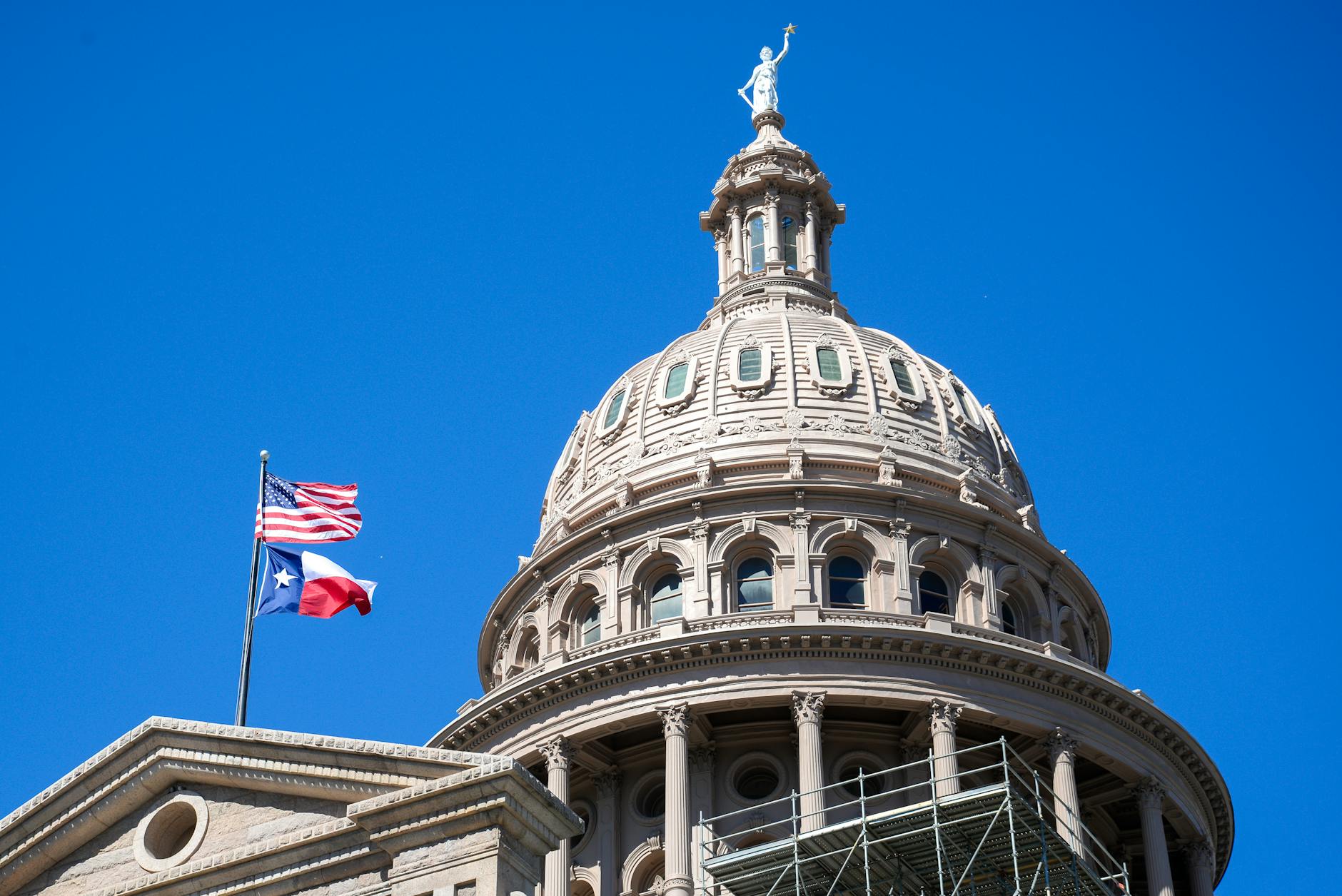
Image credit: Andrew Patrick Photo — source. Show a visible credit link to Pexels on the site.
[…] Texas Unveils Congressional Map Shaped Like Supreme Court’s Feelings About Math […]
[…] Texas Unveils Congressional Map Shaped Like Supreme Court’s Feelings About Math […]