

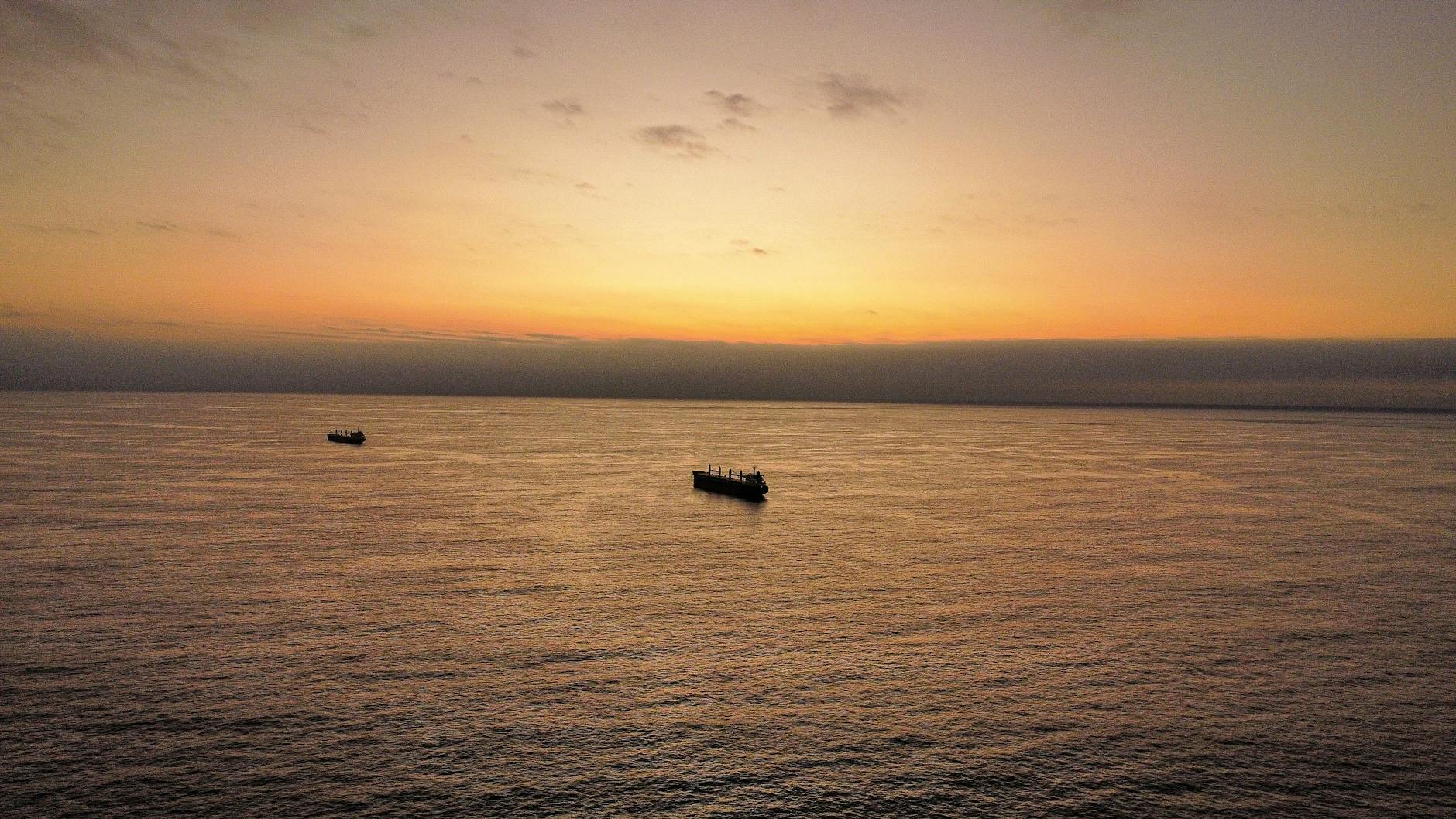
The Senate reportedly asked whether oil tankers count as witnesses or amendments.
WASHINGTON—President Donald Trump and Chinese President Xi Jinping concluded their summit with an agreement on shipping through the Strait of Hormuz, then watched the deal immediately get translated by Washington into a custody dispute involving crude oil, global anxiety, and one very overworked map.
The framework, described by fictional aides as “joint supervision without joint responsibility,” would allow both governments to claim stability while blaming the tide for anything inconvenient. In diplomatic terms, it was considered a breakthrough because nobody left the room threatening to rename a sea lane after himself.
A Custody Arrangement For Cargo Ships
Under the satirical version of the agreement, tankers moving through Hormuz would receive alternating emotional support from Washington and Beijing, depending on the day, the market reaction, and which leader last posted about strength.
The arrangement reportedly includes a maritime visitation calendar, two laminated arrows, and a clause requiring every ship captain to say the words “rules-based order” before entering contested waters.
“This is less a treaty than a parenting plan for international commerce,” said Marcy Kellerman, a fictional fellow at the Center for Strategic Bottlenecks. “The important thing is that the tankers know both superpowers love them very much, even when they are using them to send messages.”
Markets responded cautiously, which in financial language means traders stared at screens with the expression of people watching Congress assemble furniture without instructions.
Congress Requests A Map
On Capitol Hill, the Senate began reviewing the Hormuz language after several members asked whether the strait was near Taiwan, Ukraine, or “one of the courts.” Staffers clarified that it is a narrow waterway connecting the Persian Gulf with the Gulf of Oman, at which point three committees claimed jurisdiction.
A brief procedural dispute followed over whether shipping lanes should be handled by Foreign Relations, Armed Services, Commerce, or whichever committee currently has the most dramatic hearing room lighting.
The Supreme Court was not involved, though that did not stop cable panels from asking whether the agreement could survive judicial review if the Strait of Hormuz ever filed an amicus brief.
“Washington has reached the point where even geography needs counsel,” said fictional trade analyst Ben Rusk. “If a canal, strait, or bridge appears in the news three times, someone drafts subpoenas.”
The White House framed the summit as proof that rival powers can cooperate on essential shipping routes. Critics framed it as proof that every global crisis now comes with a domestic spin cycle, a Senate side quest, and at least one chart that looks like it was made during turbulence.
Context
Trump and China’s Xi Jinping wrapped up a summit that included an agreement related to shipping through the Strait of Hormuz, a critical route for global energy transport. The real story concerns foreign policy and maritime security, not custody schedules, court filings, or congressional map confusion.
Satire notice: This article is satire and parody. It is not factual reporting.
Inspired by: wng.org
Photo: Diego Rodríguez
[…] Trump And Xi Assign Strait Of Hormuz A Shared Custody Schedule […]
[…] Trump And Xi Assign Strait Of Hormuz A Shared Custody Schedule […]