

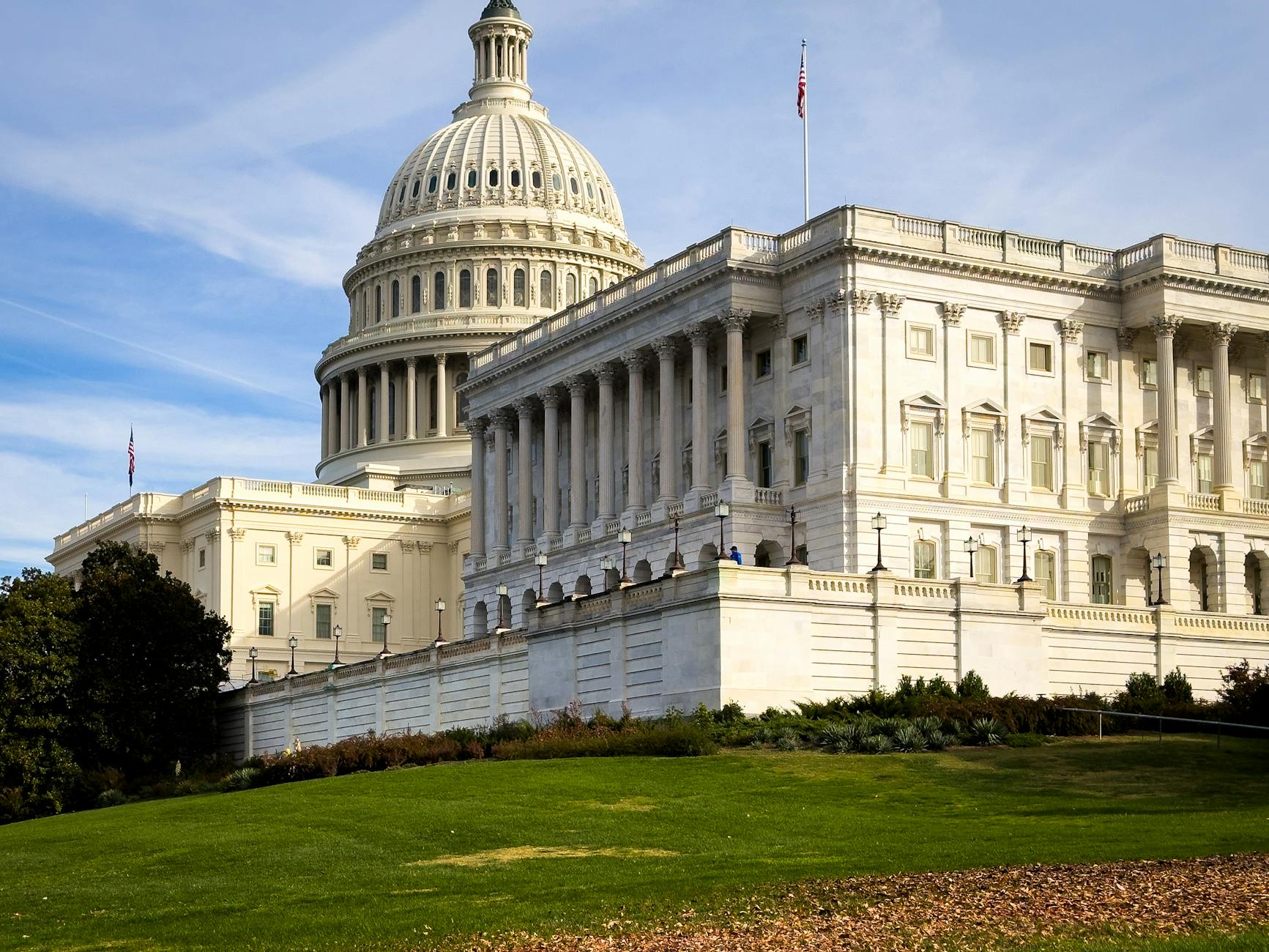
This trump senate satire turns a real public story into fictional political commentary.
The House is expected to ask whether the cash can be deported before the court asks for a form.
Trump Senate Briefing

The Senate approved $70 billion for Trump immigration agencies, creating the first federal funding package large enough to require crowd control.
Capitol staffers reportedly rolled the number into the chamber on three carts, two dollies, and one campaign-style stopwatch. The clerk read it twice because the comma placement looked partisan.
Within minutes, immigration agencies began drafting rules for the money’s arrival. Every dollar would receive a temporary badge, a lanyard, and strict instructions not to loiter near procurement.
The Money Gets A Badge
The Department of Homeland Security prepared Form I-70B, “Intent To Become An Enforcement Grant.” The form asks whether the applicant is cash, cash-adjacent, or a talking point wearing boots.
A budget office installed a velvet rope around the appropriation. A handwritten sign warned: “No unauthorized amendments beyond this point.” Senators immediately stepped over it to pose with a chart.
The court system also entered the paperwork pile. One district court asked whether $70 billion could be enjoined, severed, remanded, or simply placed in a smaller envelope.
“That is not a budget line,” said one fictional appropriations analyst. “That is a weather system with committee jurisdiction.”
Senate aides defended the package as “targeted,” a word they used while pointing at a spreadsheet that had its own zip code. The spreadsheet crashed twice and then requested asylum from Excel.
House Searches For The Fine Print
The House prepared to review the bill by assigning 14 members to locate page one. A separate working group will determine whether the stapler budget survived the border surge.
Republican leaders praised the spending as serious policy. Then they scheduled a hearing called “Why Is This Serious Policy So Heavy?” with a witness table reinforced by sandbags.
Democrats objected to the scale, then demanded a full accounting of every new badge, boot, bus, cubicle, clipboard, and dramatic lectern purchased with the funds. The lectern line item was marked “operational necessity.”
By afternoon, agencies had created an Office of Incoming Appropriation Control. Its first memo warned employees not to feed the money after midnight or let it wander into a continuing resolution.
The Senate parliamentarian declined to rule on whether the cash had crossed a procedural border. She returned the question with a note reading, “Please stop mailing me metaphors.”
At the White House, aides described the funding as a major immigration victory. They did not explain why the victory needed pallet storage, a compliance webinar, and three new acronyms before lunch.
Context
The BBC reported that the U.S. Senate approved roughly $70 billion in funding for immigration agencies under President Trump. The measure is part of a broader fight over immigration policy and federal spending.
The legislation still involves the normal pressures of Congress, including negotiations with the House, legal challenges, and public debate over how immigration enforcement should be funded and overseen.
Photo: terry bazemore iii