

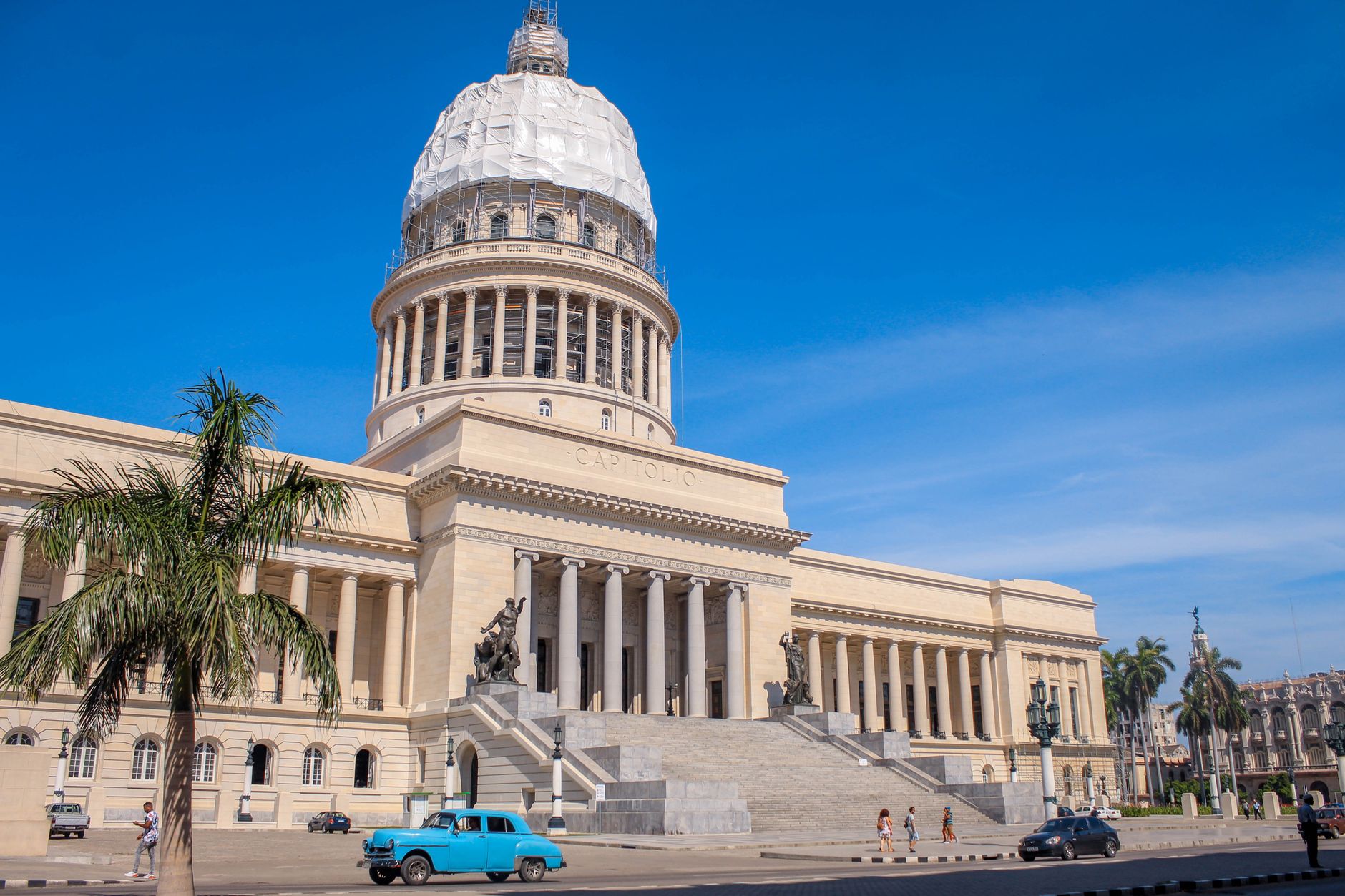
This white house debuts satire turns a real public story into fictional political commentary.
The Senate immediately requested overtime hearings after discovering misery could be seeded like March Madness.
White House Debuts Briefing

The White House spent Thursday converting a foreign policy remark about Cuba and Iran into a laminated national dashboard, after the vice president suggested Cuba’s economy may be in worse shape than Iran’s.
The new chart, titled “Comparative Hardship Index: Please Do Not Touch,” ranks troubled economies using color codes, arrows, and one unpaid intern with a label maker.
West Wing Discovers The Bracket Format
Staff placed Cuba and Iran on opposite sides of a dry-erase bracket normally reserved for campaign chaos, Senate head counts, and deciding which cabinet secretary gets the good chair at briefings.
Aides then added “supreme level difficulty” stickers to any country with long bread lines, sanctions, fuel shortages, or a finance ministry that answers calls with a sigh.
“This is not policy,” one economic adviser said. “It is a chart wearing a tie.”
The Situation Room reportedly rejected an early version because the arrows pointed everywhere, including toward the coffee machine. A later draft solved the problem by blaming the court.
To avoid diplomatic strain, the White House renamed the ranking system the Regional Fiscal Weather Map. Cuba received “heavy institutional humidity.” Iran received “partly sanctioned with scattered procurement problems.”
Senate Requests A Hearing, Then A Bigger Pointer
Senators demanded a closed briefing after learning the bracket lacked room for footnotes, constituent outrage, or a member holding up a printed New York Times column three times.
One committee staffer proposed subpoenaing the marker. Another asked whether Trump-era binders still contained a reusable tab labeled “Bad Economy, Foreign, Very.”
The Treasury Department tried to add numbers, but the chart rejected them on aesthetic grounds. A deputy assistant undersecretary then introduced a scale based on empty shelves, currency headaches, and how often a spokesman says “resilience.”
By late afternoon, the briefing room had adopted tournament language. Cuba “advanced” after a staffer cited shortages. Iran “challenged the call” and requested a review by a neutral court of economists, which does not exist but already has a logo.
The National Security Council advised against announcing a winner. The press office agreed, then scheduled a background call titled “No Winner In Misery, But Also Please See Attached Graphic.”
Foreign policy experts warned that ranking national economic pain like a sports pool could create problems. The White House responded by moving the bracket to a smaller board and calling it “internal morale documentation.”
By evening, aides had retired the original chart to a storage closet beside old debt ceiling clocks and a cardboard cutout used to explain tariffs. Someone left Cuba and Iran tied with a final score of “complicated.”
Context
The satire is based on a real report that the U.S. vice president claimed Cuba’s economy is in worse condition than Iran’s. The comment drew attention because both countries face serious economic pressure and strained relations with Washington.
This article invents the White House bracket, Senate reaction, and bureaucratic ranking system. It uses the real comparison as a starting point for fictional political satire.
Photo: Noriely Fernandez