

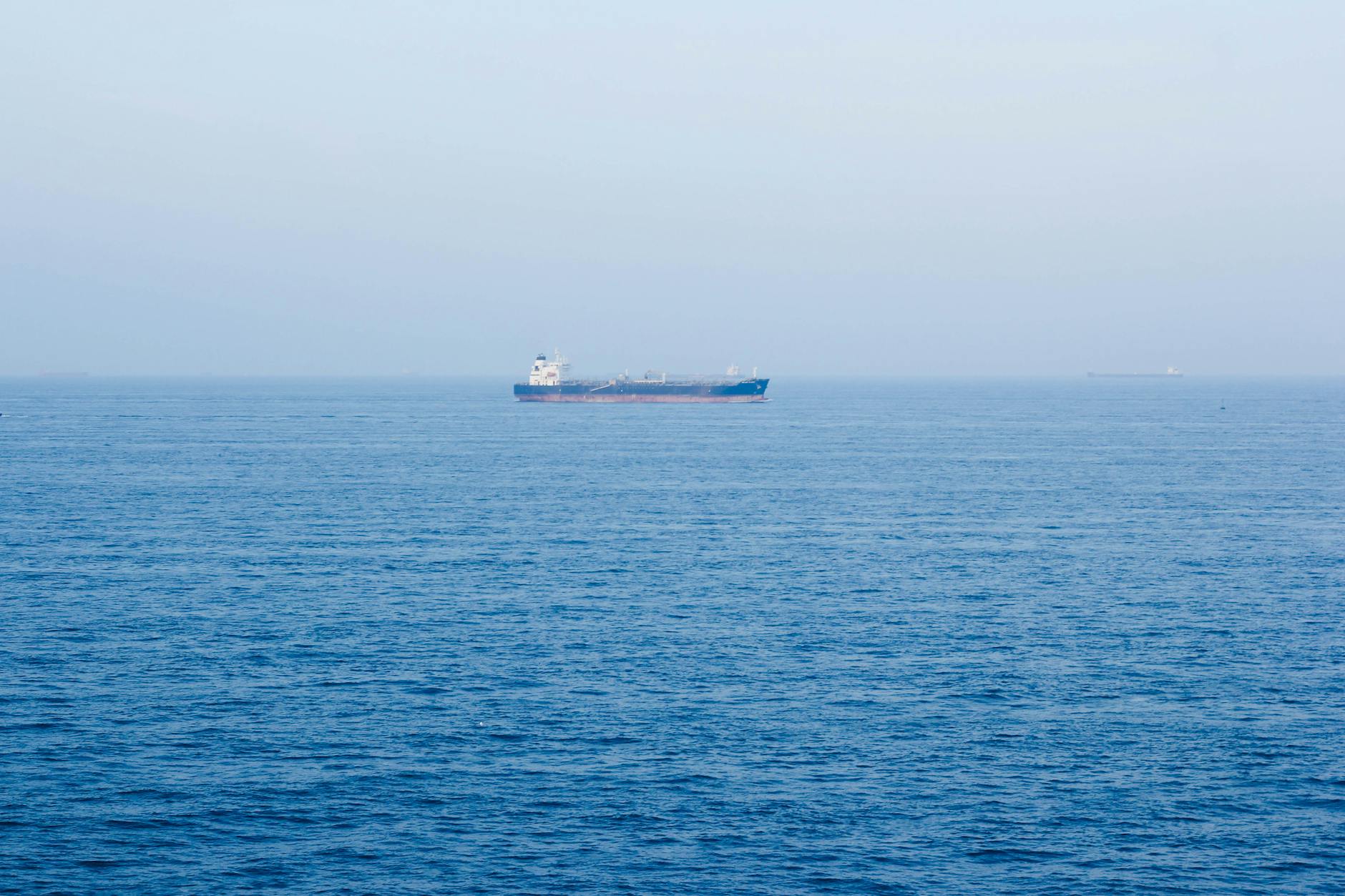
The administration classified the consensus as a rare diplomatic breakthrough in which both governments noticed where the oil is.
The State Department on Thursday issued a fictional supplemental briefing celebrating what it described as “meaningful bilateral alignment” after China and the United States reportedly agreed that the Strait of Hormuz should continue performing its core function as a strait.
The agreement, reached during President Trump’s discussion with Chinese President Xi Jinping about Iran, was immediately routed through several emergency committees tasked with determining whether two rival superpowers acknowledging a shipping lane exists counts as diplomacy, deterrence, or maritime customer service.
Senate staff were advised to prepare for hearings on the matter, though early guidance warned members not to ask whether “keeping the water open” required appropriations, a court order, or a commemorative coin.
Minutes From The Waterway Working Group
A fictional memo circulated among foreign policy personnel described the development as “a significant stabilization event in which all parties expressed opposition to turning a major oil chokepoint into a decorative international grievance.”
“The Strait of Hormuz remains a narrow body of water, and the position of the United States is that it should not be promoted to geopolitical hostage without proper paperwork,” the memo read.
China’s concurrence was treated with unusual procedural excitement, largely because it allowed Washington to briefly say “Beijing agrees with us” without immediately adding three paragraphs about tariffs, cyber concerns, balloons, fentanyl precursors, Taiwan, or whose embassy used the wrong font.
One senior fictional logistics coordinator reportedly proposed a joint U.S.-China slogan: “Please Do Not Block The Oil Hallway.” The phrase was rejected as insufficiently solemn but retained for possible use on laminated crisis placards.
Implementation Guidance
The National Security Council’s fictional Strait Continuity Desk recommended that agencies avoid over-celebrating, noting that an agreement to keep a critical waterway open is “less a peace accord than a shared refusal to make everyone’s gas prices scream in multiple languages.”
Officials also prepared contingency language in case markets became too encouraged by the news. Draft talking points instructed spokespersons to emphasize that the situation remained serious, complex, and “not yet suitable for a New York Times trend piece about the return of adult supervision to nautical geography.”
Within the administration, the reported alignment was framed as proof that great-power competition still leaves room for practical cooperation, especially when the alternative involves insurance markets, oil tankers, and the phrase “global supply shock” appearing on cable news graphics before breakfast.
“This is not a friendship,” one fictional briefing note clarified. “It is a mutual recognition that the map has consequences.”
The policy takeaway was later summarized for internal use as follows: if a waterway carries a large share of the world’s energy supply, it is preferable for rival nations to agree it should remain water.
Context
Secretary of State Marco Rubio said China agreed with the United States on the importance of keeping the Strait of Hormuz open when President Trump discussed the Iran conflict with Chinese President Xi Jinping. The Strait of Hormuz is a critical passage for global oil shipments, making its security a major concern during Middle East tensions.
Satire notice: This article is satire and parody. It is not factual reporting.
Inspired by: MSN
Photo: Houwng Nguyen
[…] Rubio Says China Joined Coalition Against Closing Strait Of Hormuz […]
[…] Rubio Says China Joined Coalition Against Closing Strait Of Hormuz […]