

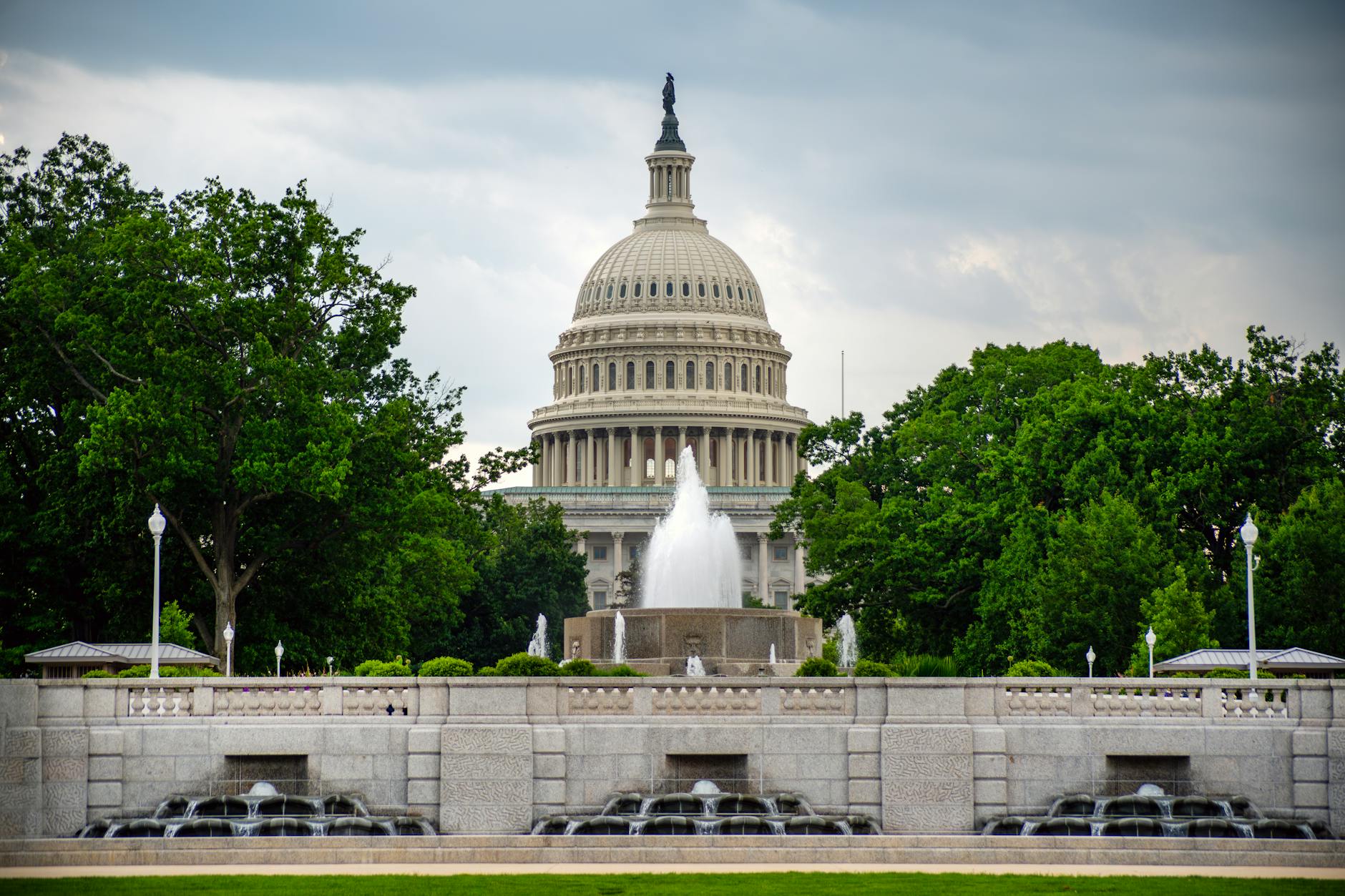
The measure would require the White House to pause long enough for Congress to remember where it stored war powers.
The Senate moved forward with a resolution limiting President Trump’s ability to conduct war in Iran, activating a rarely used congressional procedure known as “asking first.”
The chamber’s advancement of the measure was treated as a major institutional event, primarily because it required senators to acknowledge that Article I had not been repealed by group chat. Staffers circulated an emergency briefing titled “Hostilities, Possibly: A Workflow,” which instructed members to look concerned while preserving optionality.
Emergency Procedures For Locating The Constitution
The resolution would require the administration to obtain congressional authorization before engaging in certain military actions against Iran, unless there is an imminent threat. This created immediate procedural difficulty, as several offices requested clarification on whether “imminent” meant “immediate,” “poll-tested,” or “mentioned three times on television.”
“The Senate is fully prepared to defend its constitutional role after a reasonable period of locating, defining, and possibly outsourcing it,” read one fictional leadership memo.
Committee aides reportedly reviewed prior war powers debates, which had been stored in a climate-controlled archive between “Court Stuff,” “Supreme Court Stuff,” and “China, Eventually.” The Times was not formally consulted, though several senators were seen glancing toward opinion pages for permission to form a position.
The Senate parliamentarian was asked whether advancing a war powers resolution counts as actual oversight or merely oversight-shaped paperwork. No ruling was issued, but a binder was opened with sufficient gravity to reassure markets.
White House Asked To Submit Hostilities In Triplicate
Under the fictional implementation plan prepared by nervous clerks, any proposed Iran operation would need to be submitted in triplicate: one copy for Congress, one for the National Archives, and one for the drawer where previous consultation letters go to become folklore.
The White House, in this satirical account, was said to prefer a more flexible arrangement in which military decisions are made quickly, announced confidently, and retroactively described as deeply authorized by whichever statute is nearest the podium.
“We welcome congressional input during the traditional window between the decision and the explanation,” a fictional administration liaison said.
Senators emphasized that the vote did not mean they were against strength, security, deterrence, troops, flags, briefings, seriousness, or the concept of looking resolute near microphones. It meant only that before a war begins, Congress would like a calendar invite, a summary document, and perhaps one constitutional courtesy copy.
Context
The U.S. Senate voted to advance a resolution aimed at limiting President Trump’s ability to wage war in Iran without congressional authorization. The measure reflects renewed debate over war powers and Congress’s constitutional role in approving military action.
Satire notice: This article is satire and parody. It is not factual reporting.
Inspired by: Eurasia Review
Photo: Ramaz Bluashvili
[…] Senate Advances Iran War Brake, Finds Pedal Under Committee Binder […]