

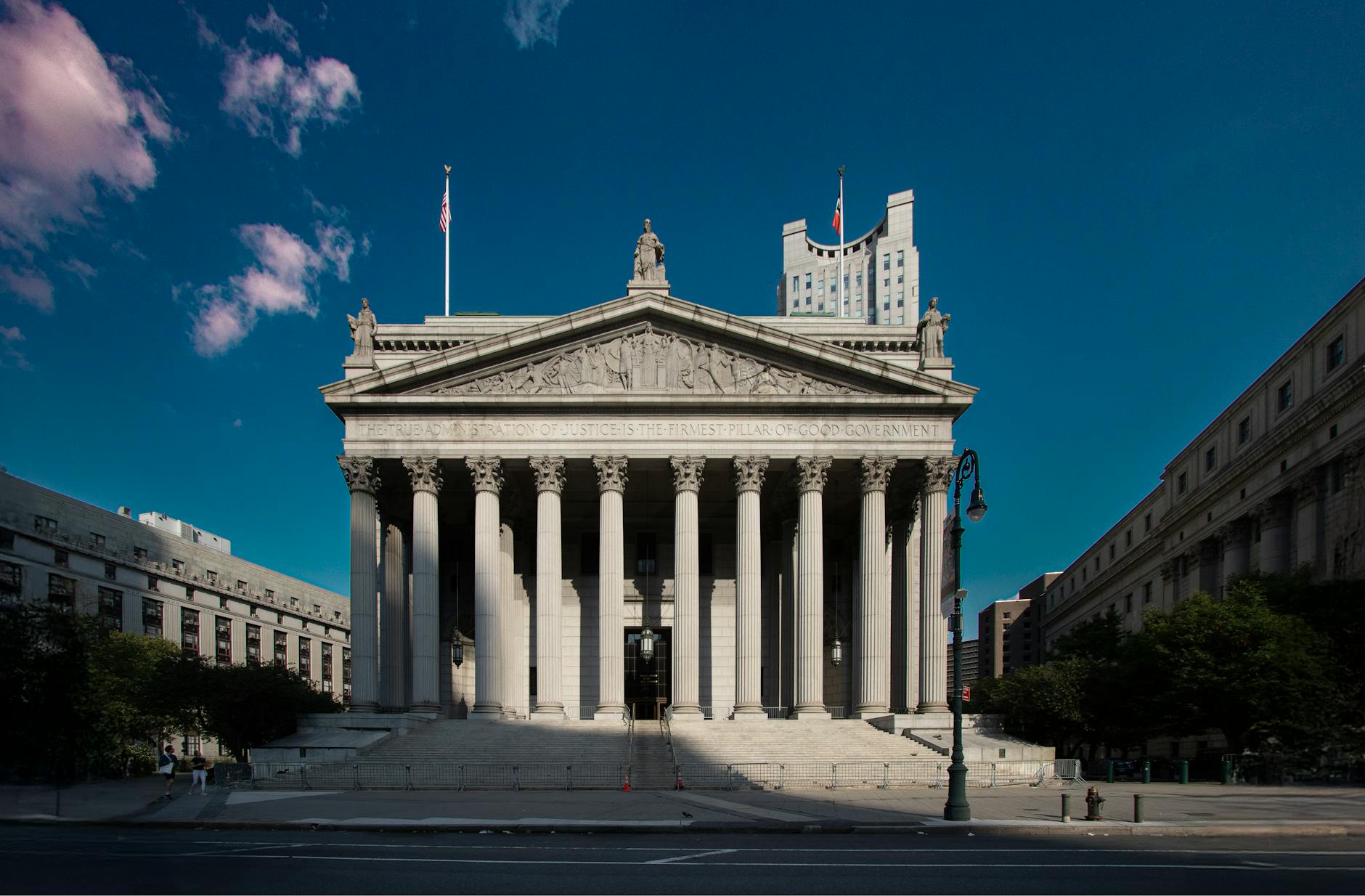
In a 6–3 ruling, justices bravely confirm that “crayon tornado” is not a legal standard for representative democracy.
In a stunning rebuke to advanced cartographic guesswork, the Supreme Court on Wednesday struck down Louisiana’s congressional map, ruling 6–3 that “districts must, at minimum, be findable on a map without spiritual guidance.”
The decision, which sends the map back to state officials, marks the first time the Court has formally held that “just drawing a question mark around your friends” is not an acceptable redistricting strategy.
Court Finds District 3 Extends Into Emotional Support Dimensions
Writing for the majority, the Court concluded that several Louisiana districts appeared to “cross parish lines, time zones, and one Taco Bell drive-thru four separate times.” One district reportedly included a single cul-de-sac in Baton Rouge, a seafood restaurant in Shreveport, and the concept of “voter engagement” as understood in 1997.
“The Constitution does not contemplate a universe where one voter’s district is simultaneously in Louisiana, the Fifth Circuit, and the Mariana Trench,” the opinion stated, in language court-watchers described as “unusually tired.”
Louisiana’s attorney general defended the map as “innovative,” insisting the unusual shapes were the result of “natural geographic features, like rivers, highways, and whichever neighborhoods kept voting the wrong way.”
“This is not gerrymandering,” one state lawyer told reporters. “This is artisanal democracy, hand-drawn in small, wildly unbalanced batches.”
The dissent, signed by three justices, argued that while the map was “cartographically deranged,” it was not the Court’s role to “protect Americans from the consequences of letting state legislatures cook unsupervised.”
Emergency Task Force to Teach States What a Line Is
In response to the decision, Congress immediately announced the creation of the National Commission on Things Having to Be Reasonably Shaped, a bipartisan panel tasked with reminding states that “a district is a bounded area, not a mood.”
The Commission’s 800-page preliminary guidance includes such clarifications as “circles are okay,” “snakes are suspicious,” and “if your district goes through three other districts like a straw, please stop.”
“Our goal is simple,” said the Commission’s chair. “We want every American to be able to point to their district on a map without needing a laser pointer, two mirrors, and a Ouija board.”
Louisiana officials say they will comply with the ruling by producing a replacement map that both meets constitutional standards and, as one aide put it, “still gently encourages some voters to move to Arkansas.”
Early drafts reportedly include one district shaped like a regular polygon and another shaped like “an apology to the Voting Rights Act, but in cursive.”
The Court warned that if states continue submitting “Rorschach tests with ZIP codes,” it may be forced to take the drastic step of letting an independent commission draw them, or worse, “letting fifth graders with rulers take a crack at it.”
Sources in Baton Rouge say legislators are already working on a backup plan: replacing the entire map with a single district labeled “We’re pretty sure this is fine, please don’t look closely.”
Reality Check
The real news: The U.S. Supreme Court ruled 6–3 to strike down Louisiana’s congressional map. The Court found the map likely violated federal law by diluting the power of Black voters and ordered the state to draw a new map. The decision affects how Louisiana’s districts will be configured in upcoming elections and is part of a broader legal battle over redistricting and voting rights.
Satire disclaimer: This article is satire and parody. It is not factual reporting.
Original source: MS NOW
Image credit: Following NYC — source. Show a visible credit link to Pexels on the site.
[…] Supreme Court Tosses Louisiana Map, Demands Districts That Exist in Euclidean Space […]